Friday, 11 December 2020

When Prof Tandon adviced Tibuhaburwa(the one who is too wise to be advised)to hand over power to younger generation

 President Museveni with Prof Yash Tandon

Prof Tandon to Museveni: hand over power to younger generation

https://observer.ug/news/headlines/60661-prof-tandon-to-museveni-hand-over-power-to-younger-generation

Yash Tandon, "Common People's Uganda"

(2019) Nairobi: Zand Graphics

https://www.yashtandon.com/common-peoples-uganda
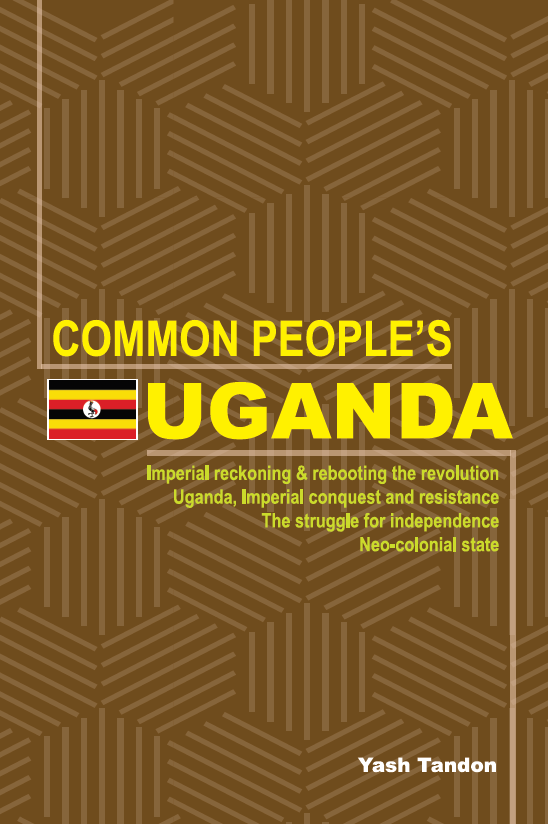
Common People's Uganda — Yash Tandon

The book is dedicated to:

·        Ignatius K Musazi and Semakula Mulumba who united us all; and to

·        John Kakonge and Dani Wadada Nabudere who showed us the way

Ngugi wa Thiong'o has Prefaced the book with the title: "Towards a Common people's Africa". And in the Foreword, Edward Rugumayo has related some of his own experiences in the struggle for Uganda's liberation.

So why this book?

Neoliberal policy makers  in  Uganda  are  in  denial  about  two things: 

1.     A reluctance to look at imperialism in the face, and acknowledge that the capitalist-imperialist system of production and wealth distribution is inherently and fundamentally flawed.

2.     Left to the so-called 'free market', the system not only divides people between the rich and the poor but further compounds this division over time because the market rewards the rich and penalises the poor.

In the northern regions of Uganda including West Nile and Karamoja (where I come from), up to 26% of people are chronically poor; 80% of households live below poverty line, compared to 20% in the rest of the country.

Recognising this reality, it is important to place Uganda within the broader global geopolitical as well as national contexts.

1.     Uganda got its independence on 9 October 1962. Is it possible that for over half a century Uganda is still not fully independent?  What has imperialism to do with it?

2.     Why is it that over half a century since independence Uganda is still an exporter of basic raw materials and importer of manufactured products, and dependent on the so-called "foreign aid"?

3.     What are the policies that really matter? Specifically, what are the policies that affect the production and distribution of goods and services (like health and education), policies that affect the welfare of the common people?

This is one objective of the book. The second is to learn from the American and French Revolutions; the Russian, Chinese, Vietnamese and Cuban revolutions; and, above all, from Africa's struggle for liberation from the colonial Empires.

And the third is to provide an analysis of the political-economy of Uganda and Africa - a knowledge-kit necessary to make a critical assessment of the decisions taken in the name of the common people, and to challenge our politicians and also the media that distort reality in this era of “fake news”. To this end, each chapter ends with a list of questions. These help readers in two ways:

1.        They allow the readers to reflect on the questions without necessarily agreeing with the author.

2.        They raise issues related concretely to Uganda. However, many of the questions are general - especially Part Three on “Imperial reckoning: rebooting the revolution”, may apply to the rest of Africa and the global south.

In the last chapter on "Some Concluding Thoughts", I raise some issues for discussion on the strategy and tactics of struggle, and the question of leadership. This is a challenge for our President, and I ask: Can the Prince of “Sowing the Mustard Seed” rise up to the challenge?

Epilogue

Here I draw on two recent publications, Apollo Makubuya: Protection, Patronage, or Plunder? Imperial Machinations and (B)Uganda's Struggle for Independence; and Frederick Juuko and Sam Tindifa: A People's Dialogue Political Settlements in Uganda and the Quest for a National Conference.

I examine how the proposal of holding a "National Conference" put forward in the Juuko-Tindifa report might be taken a step further. I draw from the experience of the group that put together the Moshi Conference in 1979 which gave birth to the Uganda National Liberation Front (UNLF). The Juuko-Tindifa proposed National Conference is both a challenge and opportunity for the nation to address. 

I also analyse the Bobi Wine phenomenon as an emblematic symbol of a generational shift in Uganda's politics.

Bidandi's open letter to Museveni

http://www.observer.ug/index.php?option=com_content&view=article&id=3109:bidandis-open-letter-to-museveni&catid=37:guest-writers&Itemid=66

Monday, 27 April 2009 09:33

Written by Bidandi Ssali

His Excellency,
Yoweri Kaguta Museveni,
President,
Republic of Uganda,


Your Excellency,

I salute you Mr. President.

I am addressing you on the delay of the amendment of the electoral laws as a matter of extreme concern for peace and stability of our country. The Electoral Commission has announced a programme for the 2011 general elections well in time for the people of Uganda to be sensitized to play their constitutional right to elect their leaders for another five years.


Mr. President, the People’s Progressive Party and indeed all peace loving Ugandans are worried that, up to now your government has not bothered to bring to Parliament the necessary amendments to the electoral laws that should ensure free and fair elections.

Your Excellency must be aware of the controversies that followed the 2001 and 2006 elections that ended in Courts of Law whose verdict was that, the electoral process was marred by malpractices which many consider worse than those which triggered your heading for the bush to wage an armed war against the Obote II government. You need not be reminded of the price this country has paid as a consequence in terms of blood epitomized to date by monuments of human skulls and the tragedy of the northern war which still claims lives of Ugandans and has created a traumatized society in disarray whose hearts will continue bleeding for decades to come.

Judging by what has been happening during the by-elections which have included intimidation, beating of voters and stuffing of ballot boxes perpetrated especially by your NRM, the country is likely to experience the same if not worse chaos come 2011.

The primary solution obviously lies in amending the electoral laws and procedures in order to ensure free and fair elections. The PPP and other Parties are certainly working to dislodge you from the leadership of this country to arrest further destruction of the country, your good beginning in the eighties and nineties notwithstanding. However, the PPP will not raise a finger if your unbridled love for power is achieved through free and fair elections which unfortunately are not possible with the present Electoral Commission and present laws.

Mr. President, we see your unwillingness to amend the electoral laws as part of a deliberate scheme to rig the 2011 elections so that even if ultimately some amendments are stampeded through Parliament, it will be logically impossible to implement them because of time and resource constraints.

I can assure Your Excellency that that will be a recipe for another spate of bloody chaos in the country. You might have equipped the army, militarized the police and the civil service and misused the poor peasants’ children by training them into Kiboko Squads to beat the very people you are mandated to protect but this time the price in human blood and subsequent skulls could be much more than the country has seen before.
In stating so, I am not a harbinger of doom, but one only needs to feel the political pulse of the people of Uganda today and place it in focus with our past and what recently went on in countries like Kenya and Zimbabwe.

This is the time to reconstitute the Electoral Commission in order to reflect a credible institution that will not only be, but also appear to Ugandans to be impartial under a multiparty democracy. Be informed Mr. President that there is a limit beyond which reliance on money or the might of the gun and other means of coercion will keep one in power against the will of the majority of the people’s wish.

Incidentally Your Excellency, what really happened to the Museveni of the eighties and nineties? Why have you persisted in destroying the democratic institutions of governance with impunity and instead taken over their roles? Why set Parliament against the Presidency? Cultural institutions against each other? Public officers against each other? As a student of political science, what does NEPOTISM mean to you? And what do you feel when its ugly face and consequences are attributed to your leadership? When you read in The Independent Newsmagazine issues detailing the involvement of almost your entire family and relatives in the governance of the country, isn’t your conscience perturbed in any way?


Mr. President, you have played your part and made a monumental contribution to this country. You have an obligation to hand over to the next generation a united, peaceful and free Uganda with its people living in harmony.


A word about my son Muhoozi Kainerugaba. I know him well enough. By nature and training he should be one of the finest soldiers we have in the country. Please protect him by weaning him from your parental grip to enable him fulfill his professional mandate to the country. He is NOT his father’s soldier. You have ceded Muhoozi the son to the service of Uganda and its people. Set him free so that his destiny is not embroiled in your destiny which in the end will be defined and decided by your own actions and decisions. This is a divine law of nature that has enabled the children of past leaders like Amin, Obote, Lutwa and others live peacefully outside the shadows of their parents. The same position though does not hold in respect of the children of the late Mobutu Sese Seko or the Sadams of yesterday.

You and I are not prodigies of the whims of the late Kaguta your dad or Bumali Kakonge, my late father.

Finally, let me once again assure Your Excellency that I write all this to caution a colleague I respect but who I believe has lost conscience and all ethical ethos of leadership, and therefore bound to land our country in the abyss of further disintegration, hatred and chaos.

FOR GOD AND MY COUNTRY.
Bidandi-Ssali
Chairman,
People’s Progressive Party

The Poverty of Neo-liberalism: When 11 million starve despite 34 years of Tibahaburwa’s rule: UN baffled as endowed Uganda fails to beat hunger

 Children receiving food aid in Karamoja recently

UN baffled as endowed Uganda fails to beat hunger 

https://observer.ug/news/headlines/67737-un-baffled-as-endowed-uganda-s-fails-to-beat-hunger

United Nations agencies are baffled as to why hunger and undernutrition still remain a challenge in Uganda despite enormous opportunities and abundant resources in the country.  

Uganda is one of the countries that were expected to end hunger, achieve food security and improved nutrition, and promote sustainable agriculture by 2030 as outlined in Sustainable Development Goal (SDG) number two. But since 2015, there seems to be no progress, despite a slight increase in agricultural output, according to the UN.

Uganda boasts of almost half (47 per cent) of all the arable land in East Africa, giving it a huge agricultural competitive advantage in the region and Africa. But like much of the continent, it has not progressed, and the World Bank and UN attribute this to a lack of investment and financing to take subsistence farming to a larger scale. 


The Food and Agriculture Organisation (FAO) country representative in Uganda, Antonio Querido says that the country needs to review laws and policies that relate to food security and nutrition. This should cater for the right to food, food research, food distribution and food reserves among others, according to Querido, who adds that otherwise there is no reason Uganda should experience food insecurity.

"If there is one country where this mission is possible, it is here in Uganda. in fact despite the commendable effort of the government of Uganda over the last decade, food and nutrition security situation is still worrying in Uganda. We’d also like to pledge support to review the food and nutrition legislation to cater for important issues such as the right to food. The establishment of the national strategy, food reserve, food aid and distribution, food bank. We would also like to pledge our support concerning our intervention related to post-harvest handling system, food policy including legislation," said Querido. 

In 2016, Uganda’s Global Hunger Index score was 26.4 and the country stood 87th out of 118 countries and, while it improved its score to 30.6, its ranking fell to 104th out of 117 countries surveyed, meaning other countries improved much faster than Uganda. And in 2017, almost 11 million people in Uganda experienced acute food insecurity, meaning they were not sure of whether they will have the next meal, usually a meal a day.

The National Planning Authority (NPA) expects that this score has now drastically declined due to the effects of the COVID-19 pandemic. Lack of adequate food and proper diet is responsible for malnutrition and stunting, which have a cost effect on the economy in terms of an unproductive population as well as health costs.  

According to the Uganda Demographic Health Survey 2016, the hungriest populations are the rural communities, who, ironically produce most of the food the country consumes and exports. But the chairperson of NPA, Pamela Mbabazi, says that Uganda now has a National Strategy Towards Zero-Hunger 2020-2030 which is expected will change the way things have been done previously.  

The implementation of the strategy will involve nine ministries led by the Office of the Prime Minister and the NPA. They include agriculture, education and sports, health, trade, industry and cooperatives, gender, labour and social development, local government, finance, water and environment as well as public service.

The minister for Public Service, Wilson Muruli Mukasa says there is a need for a mindset change, including change by most of today’s policymakers and other leaders, so that they change their attitude towards production.

"Given the history that we have gone through in the 70s when things started breaking down, we were able to survive by selling just pieces of paper under the maggendo arrangement - the black market - people could survive and make money running away from production. It became almost one of the second nature that you could actually eat comfortably without planting anything and the kind of Ugandans we have now who are in charge of things are that generation of the maggendo. We, therefore, need to work very hard when things have stabilized you can’t have food without producing anything," said Muruli. 

UN World Food Program (WFP) country director El-Khidir Daloum, questions why the good economic growth figures by both the government and the World Bank, have not led to the elimination of hunger.

"In this country, the three months before COVID, recently the World Bank, ministry of Finance published a report telling us that actually the economy is growing in the country. Even when you compare it with the East Africa community and especially to the agro-industrial related. I can stand here and count the great opportunities in this country. This is what I can’t comprehend because I come from a semi-arid land where there is no rainy season. So when you look at that zero hunger is mission possible. I put Uganda at number one. I don’t understand why zero hunger is not realised today," said Daloum.

Genuine or Fooling us as Usual : When America warns its Neo-liberal Clone Tibahaburwa Museveni : US warns Uganda on police brutality: US congressman zeros on seven SFC, UPDF, police chiefs

 Police detain one of Bobi Wine's supporters recently

2021: US warns Uganda on police brutality

https://observer.ug/news/headlines/67732-2021-us-warns-uganda-on-police-brutality

Violence: US congressman zeros on seven SFC, UPDF, police chiefs

Thursday December 10 2020
 By Our Reporter

Mr Eliot Lance Engel, the Chairman of the Committee on Foreign Affairs of the US House of Representatives, has asked his government its international partners to act and prevent what he describes  as “further destabilisation” in Uganda and “facilitate the opening of civic and political space”, just weeks to the 2021 polls.

The House of Representatives is the lower house of the US Congress, with the Senate being the upper house. Together, they compose the national bicameral legislature of the United States.

Mr Engel’s December 9, letter is addressed to Mr Mike Pompeo, the Secretary of State and Mr Steven T. Mnuchin, the Treasury Secretary.

Mr Engel, who is a Democrat, says that the US use the Global Magnitsky Human Rights Accountability Act to designate (label) individuals who may be responsible for violence in Uganda in recent years.

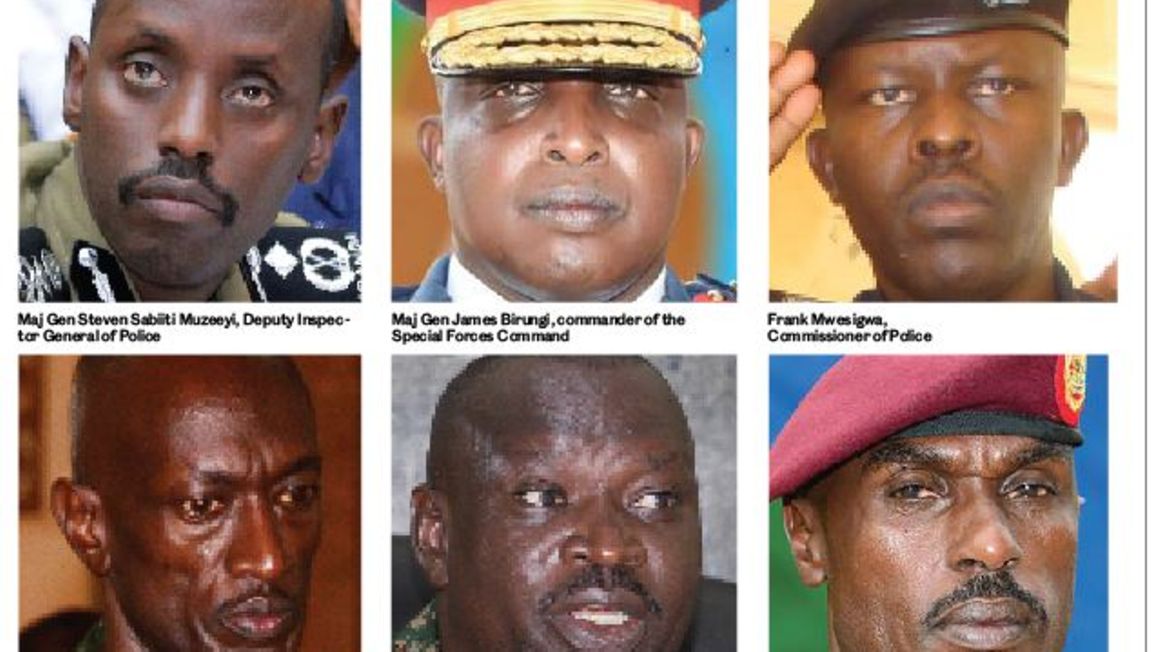
According to the politician, these include among others; Lt. Gen. Peter Elwelu, Commander of Land Forces; Maj. Gen. James Birungi, Commander of the Special Forces Command; Maj. Gen. Don William Nabasa, former Commander of the Special Forces Command; Maj. Gen. Abel Kandiho, Chief of Military Intelligence; Maj. Gen. Steven Sabiiti Muzeyi, Deputy Inspector of General of Police; Mr Frank Mwesigwa, Commissioner of Police; and Col. Chris Serunjogi Ddamulira, the Director of Crime Intelligence. 

 Mr Engel’s letter in full


I am writing to express my concern regarding the alarming slide towards authoritarianism in Uganda, a major recipient of U.S. foreign aid and one of the top recipients of U.S. security assistance in Africa. Having been in power for over three decades, President Museveni’s government has a long track record of repressive behavior. More recently, this has included attacks on independent media, the banning of political rallies and concerts, the arrest, detention, and torture of individuals who dare to challenge the president or the ruling party, and a persistent lack of accountability for the arbitrary and extrajudicial killings and torture perpetrated by Ugandan security forces.

For several years, the United States has raised concerns about the Ugandan government’s lack of respect for the civil liberties of its citizens and urged the government to conduct or permit credible investigations into alleged human rights abuses. However, diplomatic rhetoric alone has had little impact on President Museveni’s behavior. Instead, he has further consolidated power while preventing the emergence of a viable democratic opposition.

To cite a few examples: In November 2016, Ugandan security forces massacred over 100 civilians in Kasese.

In September 2017, Ugandan Special Forces forcibly entered parliament during a debate over whether to remove presidential age limits from the constitution, which now allows President Museveni to rule indefinitely.

During the tumult, MP Betty Nambooze suffered serious spinal injuries from which she is still recovering. In July 2018, the government imposed a tax on citizens who wished to access social media platforms such as WhatsApp, Facebook, and Twitter – a transparent ploy to discourage anti-government mobilization on the part of youths and dissidents. The following month, MP Robert Kyagulanyi and 32 other opposition politicians were arrested and brutally tortured following a by-election in Arua.

 Earlier this year, MP Francis Zaake was brutalized for distributing supplies to needy citizens during the coronavirus lockdown, while just last month, at least 45 people were killed by Ugandan security forces following protests in Kampala.

These violent incidents reflect a highly disturbing trajectory for the country, thus ensuring that the environment for general elections in January 2021 has been fundamentally tilted in favour of an incumbent who has been in power since 1986.


Therefore, I request that the Treasury Department and the State Department utilize the authority of the Global Magnitsky Human Rights Accountability Act (Global Magnitsky Act) to designate individuals who may be responsible for violence in Uganda in recent years, such as Lt. Gen. Peter Elwelu, Commander of Land Forces; Maj. Gen. James Birungi, Commander of the Special Forces Command; Maj. Gen. Don William Nabasa, former Commander of the Special Forces Command; Maj. Gen. Abel Kandiho, Chief of Military Intelligence; Maj. Gen. Steven Sabiiti Muzeyi, Deputy Inspector of General of Police; Frank Mwesigwa, Commissioner of Police; and Col. Chris Serunjogi Ddamulira, Director of Crime Intelligence.

 laest001 pix

 I also ask that the State Department commence a review of all non-humanitarian assistance to Uganda; commit to providing robust support to human rights defenders, and independent journalists and to building the capacity of civil society organizations; and coordinate with likeminded allies to issue a joint condemnation of violent repression.

Finally, I request that you provide the Committee with the following information in writing no later than January 9, 2021:

  • An overview of the U.S. government’s engagement with the Government of Uganda, opposition political parties, and civil society organizations with respect to the 2021 elections, and how such engagement differs from previous elections;
  • An assessment of the impact that several years of violent repression and impunity for gross human rights abuses has had on the Ugandan political environment;
  • -A detailed list of all United States security assistance and law enforcement capacity building efforts with Ugandan security forces since FY15;
  • An accounting, in classified form if necessary, of Uganda’s compliance with end-use monitoring requirements and cooperation with Leahy vetting requirements.
  • An assessment of the risks to U.S. interests in East and Central Africa of continuing to work by, with, and through an increasingly authoritarian partner who has exhibited no indications of a succession plan, and a plan to mitigate said risks over the next five years; and
  • A plan to intensify the U.S. response to human rights abuses beyond rhetorical  condemnations and work with the Government of Uganda and local non-governmental organizations to secure accountability for citizens who have been subjected to arbitrary arrests, torture, and extrajudicial killings.

My desire to see a better human rights record in Uganda is firmly rooted in the country’s own constitution and legal code, which prevent torture and enshrine the right to freely assemble and express viewpoints that may not be in accordance with those of President Museveni.

Moreover, considering Uganda’s importance to U.S. security interests in East and Central Africa, it is imperative that the United States and its international partners act to prevent further destabilization in Uganda and facilitate the opening of civic and political space for which Ugandan citizens are mobilizing.


When Ugandans Believe that Museveni’s neo-liberal murderous regime killed Mortar mouthed Muslim cleric Sheikh Nuhu Muzaata Batte

 Fare thee well, Sheikh Nuhu Muzaata Batte

MUST READ:

Birds of a feather: when Babylon USA trains its slave states to kill and formally hide all traces: MP Nebanda: Kalungi found guilty of manslaughter : Compare with: Lydia Draru, found of manslaughter for killing Gen.Kazini

https://watchmanafrica.blogspot.com/2014/02/birds-of-feather-when-babylon-usa.html


Poison : Is this Uganda’s new political weapon?


http://watchmanafrica.blogspot.com/2013/01/poison-is-this-ugandas-new-political.html

Ugandans Skeptical about Mysterious death of MP Cerinah Nebanda: We did not kill MP Nebanda, says Museveni

https://watchmanafrica.blogspot.com/2012/12/uganda-skeptical-about-mysterious.html

Nebanda Death: Adam Kalungi Freed

https://www.redpepper.co.ug/2014/07/nebanda-death-adam-kalungi-freed/    

Mysterious deaths Museveni’s Uganda: More questions than answers: I am still in pain, says Nebanda's mother

http://watchmanafrica.blogspot.com/2013/11/mysterious-deaths-musevenis-uganda-more.html 

Have death squads come to Uganda???? MP Kyanjo suspects poisoning for his illness

http://watchmanafrica.blogspot.com/2012/10/have-death-squads-come-to-uganda-mp.html


Will the Cerinah Nebanda inquest be similar to Hutton Inquiry on Dr.David Kelly’s death : Justice Mugamba to head Cerinah Nebanda inquest

http://watchmanafrica.blogspot.com/2013/01/will-cerinah-nebanda-inquest-be-similar.html

The Death of Dr. David Kelly. Murdered on the Orders of Her Majesty’s Government?

http://www.globalresearch.ca/ten-years-ago-the-death-of-dr-david-kelly-murdered-on-the-orders-of-her-majestys-government/5343229


THE DEATH OF GARY WEBB

http://www.antipasministries.com/html/file0000245.htm

http://www.prisonplanet.com/archives/webb/  

 http://www.youtube.com/watch?v=FfK6EHo7ELA 

Fare thee well, Sheikh Nuhu Muzaata Batte

https://observer.ug/news/headlines/67733-fare-thee-well-sheikh-nuhu-muzaata-batte 

First Read:

Poison : Is this Uganda’s new political weapon?


Have death squads come to Uganda???? MP Kyanjo suspects poisoning for his illness


Nebanda Death saga: MPs punch holes in Kalungi confession as Ssekikubo is beaten and brutally arrested

http://watchmanafrica.blogspot.com/2013/01/nebanda-death-saga-mps-punch-holes-in.html

 When questions persist amidst lies: Kazini family wants fresh death probe


If you are not the killer why Doctor pictures??? Adam Musa Masuba the so Called ex-lover of late Nebanda says that the late started taking drugs this YEAR as a way of reducing her weight: Oh: really

http://watchmanafrica.blogspot.com/2013/01/if-you-are-not-killer-why-doctor.html

Persecuted for trailing the truth : The dangers of working as a pathologist in American slave states: Mulago suspends pathologist Onzivua while Bigirimana still remains in office.

http://watchmanafrica.blogspot.com/2013/01/persecuted-for-trailing-truth-dangers.html

If you are not the killer why Doctor pictures??? Adam Musa Masuba the so Called ex-lover of late Nebanda says that the late started taking drugs this YEAR as a way of reducing her weight: Oh: really


Nebanda’s mother rejects Kalungi confession


Trails and tribulations of Uganda’s death squad victim: Kyanjo needs Shs 75m for treatment in the US: Betty Nambooze also says she was also poisoned and has to go to south Africa every year for poison removal. 


Nebanda Death: Adam Kalungi Freed

https://www.redpepper.co.ug/2014/07/nebanda-death-adam-kalungi-freed/   

High Court in the Ugandan capital Kampala on Friday acquitted Adam Suleiman Kalungi, the man convicted of manslaughter in connection with the death of the late Butaleja Woman Member of Parliament Cerinah Nebanda. 

In January this year, Makindye Chief Magistrate’s Court in Kampala convicted Adam Kalungi for manslaughter in connection with the death of Cerinah Nebanda.

Adam Kalungi was sentenced to four years in jail in connection to the death of Cerinah Nebanda.

Adam Kalungi’s 5 co-accused were acquitted of the same charge.

It is alleged that on the 14th of December, while at Buziga, a Kampala suburb, Kalungi caused the unlawful death of Cerina Nebanda.

Cerinah Nebanda passed away on December 14 at Mukwaya General Clinic in Kampala and  an autopsy report revealed that multiple chemicals including cocaine and heroin were found in her blood samples.

After her death, Kalungi took to his heels after delivering the former legislator together with  friend to Mukwaya General Clinic where she was pronounced dead.