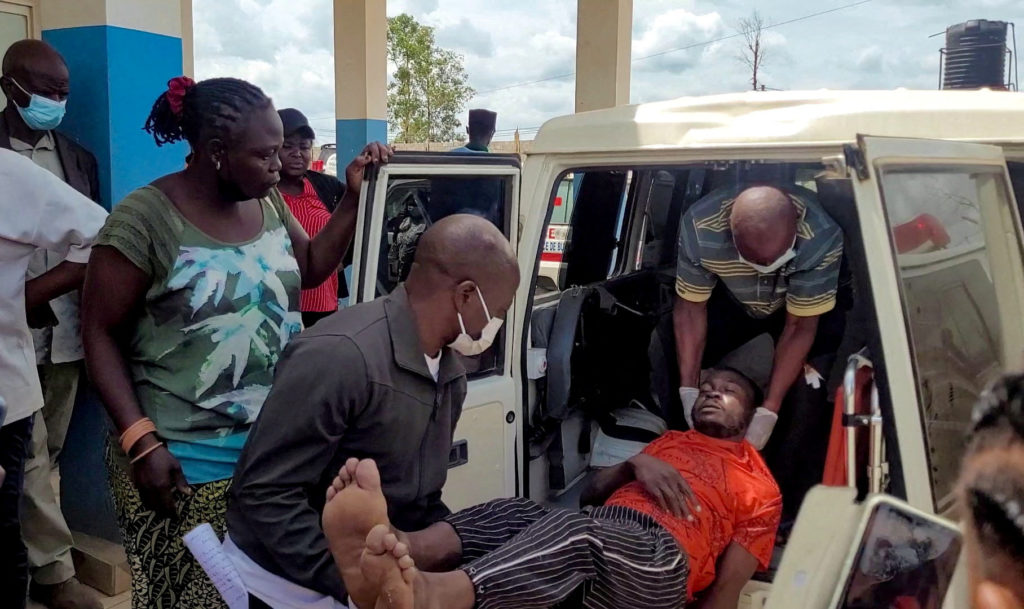
2 Son of man, set thy face against mount Seir(ESAU), and prophesy against it,…Because thou hast had a perpetual hatred, and hast shed the blood of the children of Israel by the force of the sword in the time of their calamity, in the time that their iniquity had an end: Therefore, as I live, saith the Lord God, I will prepare thee unto blood, and blood shall pursue thee: sith thou hast not hated blood, even blood shall pursue thee(Ezekiel 35:1-6).
16 Lest there be any fornicator, or profane person, as Esau, who for one morsel of meat sold his birthright. 17 For ye know how that afterward, when he would have inherited the blessing, he was rejected: for he found no place of repentance, though he sought it carefully with tears.(Hebrews 12:16-17)
MUST READ:
Wickedness in high places : When Ebola creators pretend to be messianic solvers on their own biological weapon : WHO meets on experimental Ebola drug use
http://watchmanafrica.blogspot.com/2014/08/wickedness-in-high-places-when-ebola.html

When Esau(Whites) uses Ham(Tutsi) to Kill and Loot Jacob(Congolese Bantu): Stooges of white corporations (M23 rebels) capture gold-rich Nzibira town in South Kivu
https://watchmanafrica.blogspot.com/2025/09/when-esauwhites-uses-hamtutsi-to-kill.html
Same old Tricks of Babylon USA : Preparing an Ebola outbreak in the Great Lakes Region in order to divert the World from the M23 War in DR Congo: Uganda confirms outbreak of Ebola in capital Kampala, one dead: Sexual violence being used as weapon of war in DRC: 700 killed during M23 rebels Goma city capture
https://watchmanafrica.blogspot.com/2025/02/same-old-tricks-of-babylon-usa.html
When the White Edomite Serpent kills the Children of Israel by sponsoring the War in DR Congo between M23 and the DR Congo government: The White Devil is playing innocent and pretending to be an angel of light
https://watchmanafrica.blogspot.com/2025/02/when-white-edomite-serpent-kills.html

BIO-WARFARE: WHO and the US Military succeed in making the Ebola virus a sexually transmitted disease like HIV: Ebola virus found Liberian Man’s semen 175 days after he was declared Ebola free
http://watchmanafrica.blogspot.com/2015/04/bio-warfare-who-and-us-military-succeed.html
Marburg out break in Uganda : 132 now being monitored: Naïve Ugandans think the diseases has come about because Ugandans are dirty
http://watchmanafrica.blogspot.com/2012/10/marburg-out-break-in-uganda-132-now.html
U.S. is Responsible for the Ebola Outbreak in West Africa: Liberian Scientist
http://watchmanafrica.blogspot.com/2014/10/us-is-responsible-for-ebola-outbreak-in.html
US Bio-warfare Laboratories In West Africa Are The Origins Of The Ebola Epidemic says American law professor Francis A. Boyle
http://watchmanafrica.blogspot.com/2014/10/us-bio-warfare-laboratories-in-west.html
 |
Is The US Government The Master Criminal Of Our Time?
http://watchmanafrica.blogspot.com/2014/10/is-us-government-master-criminal-of-our.html
 |
| |
Ebola as a US neo-imperialistic weapon: Portray Africans as poor helpless zombies: Come in as a solution to the Ebola virus you have created : Use this pretext to steal their mineral resources : Obama: Ebola crisis 'spiraling out of control' : US military to help Ebola effort
http://www.antipasministries.com/html/file0000081.htm
The Ebola Outbreak: U.S. Sponsored Bioterror? Why Was Ebola-Infected Patrick Sawyer Cleared for Travel?
Dear Global research.ca , The US invented the Ebola Virus from Bundibugyo, Uganda that is why they have a patent for their invention. The US’s invention of that virus is not a claim, it is the truth.
http://watchmanafrica.blogspot.com/2014/09/dear-global-researchca-us-invented.html
The Ebola Outbreak: U.S. Sponsored Bioterror? Why Was Ebola-Infected Patrick Sawyer Cleared for Travel?
http://watchmanafrica.blogspot.com/2014/08/the-ebola-outbreak-us-sponsored.html
Hypocrisy of Babylon USA: US waives child soldier sanctions on six nations
http://watchmanafrica.blogspot.com/2014/10/hypocrisy-of-babylon-usa-us-waives.html
Sensationalism and Lies about the Ebola Epidemic in West Africa : Ebola Cases Could Reach 1.4 Million Within Four Months, C.D.C. Estimates: Ebola Outbreak: The Latest U.S. Government Lies. The Risk of Airborne Contagion?
The silly childish lies about Ebola : Ebola death toll nears 7,000, says WHO : Oh! Really: The cases are really climbing to 1.4 million in four months as predicted by the US CDC
Forbidden territory: Uganda Doctor questions Why is Uganda prone to infectious diseases?
https://watchmanafrica.blogspot.com/2012/10/forbidden-territory-uganda-doctor.html
At least 131 dead in Ebola outbreak in DR Congo, official says
https://www.bbc.com/news/articles/cq6pz60p996o
At least 131 deaths have been reported in an Ebola outbreak in the Democratic Republic of Congo, with more than 513 cases suspected, local officials have said.
A spokesman for the DR Congo government said cases were now being reported over a wider area.
There are also two confirmed cases and one death in Uganda, says the US Centers for Disease Control and Prevention (CDC).
The World Health Organization (WHO) has declared the outbreak of the current strain of Ebola, which is caused by the Bundibugyo virus, an international emergency.
As this deadly Ebola outbreak continues to spread, the Congolese government has sought to reassure people that its response teams are working hard to trace and investigate suspected infections - and that there is no need for panic.
However, with cases now identified in new areas including Nyakunde in Ituri Province, Butembo in North Kivu, and the city of Goma, concern is inevitably growing.
An American doctor in the DR Congo is among those with a confirmed case, the medical missionary group they were working with and the CDC has said.
The individual will now be taken to Germany for treatment, they told CBS News, the BBC's US partner.
While the CDC did not name the American working in the country, medical missionary group Serge said one of its US doctors, Peter Stafford, had tested positive for Ebola.
Two others doctors from the group who were exposed while treating patients, including Stafford's wife, Dr Rebekah Stafford, did not have symptoms and were following quarantine protocols, the group said in a statement.
CBS News also quoted sources as saying that at least six Americans have been exposed to the Ebola virus during the outbreak in the DR Congo.
The CDC said it was supporting the "safe withdrawal of a small number of Americans who are directly affected", but did not confirm how many.
The US government is reportedly looking to arrange transport for the small group of Americans in DR Congo to a safe quarantine location, a source told health news site STAT.
Quoting a source, the site adds that the group could be taken to a US military base in Germany, though this has not been confirmed.
The CDC declined to answer direct questions about the US citizens reportedly affected during a press conference on Sunday.
Ebola disease caused by Bundibugyo virus, Democratic Republic of the Congo & Uganda
https://www.who.int/emergencies/disease-outbreak-news/item/2026-DON602
Situation at a glance
Description of the situation
On 5 May 2026, WHO received an alert regarding an unknown illness with high mortality reported in Mongbwalu Health Zone, Ituri Province, including four health workers who died within four days. Following an in-depth investigation by the rapid response team in Mongbwalu and Rwampara health zones (HZ) on 13 May, the outbreak was subsequently confirmed as Bundibugyo virus disease (BVD) due to Bundibugyo virus (BDBV) (Orthoebolavirus bundibugyoense, species) on 15 May.
On 15 May 2026, the Ministry of Public Health, Hygiene and Social Welfare officially declared the 17th Ebola Disease outbreak in the DRC, occurring in Rwampara, Mongwalu and Bunia HZ.
The
first currently known suspected case, a health worker, reported onset
of symptoms including fever, hemorrhaging, vomiting and intense malaise
on 24 April 2026. The case died at a medical centre in Bunia.
As
of 15 May, a total of 246 suspected cases and 80 deaths (four deaths
among confirmed cases) have been reported from three HZ: Rwampara (six
health areas affected), Mongbwalu (three health areas affected), and
Bunia . Twenty four suspected cases are currently in isolation
facilities across the three HZ. In addition, unusual clusters of
community deaths with symptoms compatible with Bundibugyo virus disease
(BVD) are being investigated across other HZ in Ituri and North Kivu.
A
further case reported on 16 May, an individual returning from Ituri to
Kinshasa, has tested NEGATIVE for Bundibugyo virus on confirmatory
testing by the Institut National de la Recherche Biomédicale (INRB) of
DRC, and is therefore not considered a confirmed case.
Most of the suspected cases are between 20 and 39 years old, with females accounting for over 60%, suggesting significant risks associated with household and caregiver transmission.
Initial testing of 20 samples collected in Rwampara HZ and analysed at the Provincial Public Health Laboratory in Bunia using standard Ebola Xpert were negative for Ebola virus. Samples were sent to INRB for further analysis, of which eight samples analysed were confirmed as Orthoebolavirus by polymerase chain reaction (PCR) on 15 May. Genomic sequencing confirmed the virus species as Bundibugyo virus (BDBV).
As
of 15 May, 65 contacts have been listed, with 15 identified as
high-risk. However, follow-up remains weak due to insecurity and
movement restrictions. Several listed contacts became symptomatic and
died before they could be isolated.
On 15 May 2026, the Ministry of Health of Uganda confirmed an outbreak of BVD following the identification of an imported case from the DRC. The case is an elderly man who was admitted to a private hospital on 11 May with severe symptoms and died on 14 May. The post-mortem transfer of the body to DRC was completed the same day. A clinical sample collected when the case was admitted on 11 May was tested at the Central Emergency Surveillance and Response Support Laboratory, Wandegeya, and was confirmed as Bundibugyo virus on 15 May 2026. A second imported case was confirmed on 16 May in Kampala, in an individual returning from DRC with no apparent links to the first case. At the time of reporting, no local transmission has been identified in Uganda.
On 16 May 2026, the Director-General of WHO, after having consulted the States Parties where the event is known to be currently occurring as defined in the provisions of the International Health Regulations (2005) (IHR), determined that the Ebola disease caused by Bundibugyo virus in DRC and Uganda constitutes a PHEIC.
It is currently thought that the event originated in the Mongbwalu HZ, DRC, a high-traffic mining area, with cases subsequently migrating to Rwampara and Bunia to seek medical care. Ituri province borders South Sudan and Uganda (and Bunia HZ is less than 500km from Uganda). A full epidemiological investigation and trace back exercise is ongoing.
Ituri’s role as a commercial and
migratory hub and proximity to Uganda and South Sudan increases the risk
of regional exportation and cross-border transmission.
Figure 1. Health Zones affected by Bundibugyo virus disease in Democratic Republic of Congo, as of 16 May 2026
.png?sfvrsn=db9a40db_3 "Map_Ebola disease caused by Bundibugyo virus DRC")
Epidemiology
Bundibugyo virus disease (BVD) is a severe and often fatal form of Ebola disease caused by the Bundibugyo virus, one of the Orthoebolavirus species. It is a zoonotic disease, with fruit bats suspected to be the natural reservoir. Human infection occurs through close contact with the blood or secretions of infected wildlife, such as bats or non-human primates, and subsequently spreads from person to person through direct contact with the blood, secretions, organs, or other bodily fluids of infected individuals or contaminated surfaces. Transmission is particularly amplified in health-care settings when infection prevention and control (IPC) measures are inadequate, and during unsafe burial practices involving direct contact with the deceased.
The incubation period for BVD ranges from 2 to 21 days, and individuals are usually not infectious until symptom onset. Early symptoms are non-specific, including fever, fatigue, muscle pain, headache, and sore throat, which complicates clinical diagnosis and can delay detection. These progress to gastrointestinal symptoms, organ dysfunction, and in some cases haemorrhagic manifestations. Case fatality rates in the past two BVD outbreaks, reported in Uganda and in DRC in 2007 and 2012, have ranged from approximately 30% to 50%.
Differentiating BVD from other endemic febrile illnesses such as malaria is challenging without laboratory confirmation using PCR or antigen/antibody-based assays. Control relies on rapid case identification, isolation and care, contact tracing, safe burials, and strong community engagement, as no approved vaccines or specific treatments currently exist for BVD.
Public health response
Health authorities in DRC are implementing public health measures, including but not limited to the following:
Coordination
- Rapid response teams have been deployed to Rwampara and Mongbwalu HZ.
- Provincial coordination and emergency meetings by le centre d’operation des urgences en sante publique (COUSP) have been held.
Surveillance and Laboratory
- Surveillance for suspected and probable cases is ongoing (including at relevant Points of Entry and borders).
- Operational case definitions have been elaborated in Ituri.
- Sequencing confirmed Bundibugyo virus in positive RT-PCR samples.
Risk Communication and Community Engagement (RCCE)
- Social mobilization meeting was held with community leaders in the Rural commune of Mongbwalu under the leadership of the Mayor.
Infection Prevention and Control (IPC)
- IPC assessment in key health facilities is ongoing: Bunia Hospital Centre of the Evangelical Medical Centre (CME), Mongbwalu General Referral Hospital and Abelkozo Health Centre.
- CME Bunia is maintaining isolation protocols. Healthcare workers have been briefed on the specific diagnostic profile of this strain.
Logistics
- Logistical support has been provided for investigations in Mongbwalu and Rwampara Health Zones.
- Support has been provided for the transportation of samples to INRB Kinshasa.
Health authorities in Uganda are implementing public health measures, including but not limited to the following:
- Activating national and district-level emergency measures, including enhanced surveillance, screening at borders, deployment of rapid response teams, isolation of a high-risk contact, and quarantine of all identified contacts.
- Strengthening of preparedness activities such as mobile laboratory deployment, infection prevention, and risk communication.
- Rapid response readiness teams have been deployed at all official and informal points of entry along the western border, major transit routes, and pilgrimage corridors.
- Advising health workers to remain vigilant and adhere strictly to infection prevention measures.
WHO is supporting the national authorities, including through:
- Deployment of technical expertise and rapid response teams to support response efforts.
- Deployment of IPC, clinical management and sample collection kits.
- Identification of isolation facilities for case management in Bunia, Rwampara, and Mongbwalu HZ .
- Dissemination of WHO case management protocol.
- In-depth investigations and listing of contacts of suspected/probable cases.
- Strengthening epidemiological surveillance, IPC and RCCE at all points of entry.
- Strengthening Point of Entry (PoE) screening and cross border coordination, including mass gatherings.
- Supporting the Ministry of Health in implementation of the Response Plan and WHO internal Response Plan.
- Following up with the IHR National Focal Points (IHR NFP) in DRC and Uganda on the official IHR notification while concurrently managing communication across the IHR NFP network to ensure timely coordination.
- Coordinating the delivery of key supplies.
- Engaging experts on research and development priorities.
WHO risk assessment
On 16 May 2026, WHO Director-General, after having
consulted the States Parties where the event is known to be currently
occurring, determined that the Ebola disease caused by Bundibugyo virus
in the Democratic Republic of the Congo and Uganda constitutes a public
health emergency of international concern (PHEIC), as per the provisions
of the IHR. Temporary recommendations for State Parties will be issued.
In the meantime, WHO issued advice to countries, as stated below.
This
is the 17th Ebola disease outbreak in the DRC since 1976. The last
Ebola disease outbreak in the country was declared on 4 September 2025
with total of 64 cases (53 confirmed, 11 probable), including 45 deaths
(CFR 70.3%), reported from six health areas in Bulape Health Zone, Kasai
Province. The end of outbreak was declared on 1 December 2025. The last
BVD outbreak was reported on 17 August 2012 by the DRC Ministry of
Health in Province Orientale. A total of 59 cases, 38 confirmed and 21
probable cases, including 34 deaths were reported. The outbreak was
declared over on 26 November 2012 by the MOH.
This outbreak
is occurring in a complex epidemiological and humanitarian context. A
critical four-week detection gap between the onset of symptoms of the
presumed index case (25 April 2026) and the laboratory confirmation of
the outbreak (14 May 2025) suggests a low clinical index of suspicion
among healthcare providers. This is compounded by the presence of
co-circulating arboviruses and influenza-like illnesses, masking the
initial index of suspicion for Ebola disease and exacerbating community
transmission. Furthermore, the infection and death of four healthcare
workers within a four-day span at Mongbwalu General Referral Hospital
underscores critical breaches in IPC protocols. A large number of
community deaths has been reported potentially associated with unsafe
burial practices.
Ongoing conflict in Ituri province
restricts the movement of surveillance teams, limits the deployment of
Rapid Response Teams, and hinders the secure transport of laboratory
samples. Contact tracing is challenging due to difficult access and
highly mobile populations, increasing the risk of high-risk contacts
being lost to follow up or never identified.
Ituri’s role as a
commercial and migratory hub increases the risk of regional
exportation. The proximity to Uganda and South Sudan increases the risk
of cross-border transmission if PoE screening and cross border
coordination and information sharing are not immediately reinforced. On
15 May 2026, the Ministry of Health of Uganda reported an imported case
of BVD.
Humanitarian needs in the area are dire. Ituri has 273 403 displaced people, with a total of 1.9 million people in need according to the Humanitarian Response Plan 2026 for DRC. From January to March 2026, 32 600 newly displaced and 30 200 returnees were recorded. The province recorded 5800 protection incidents and 11 incidents against humanitarian actors.
Unlike Ebola virus disease, there is no licensed vaccine or specific therapeutics against BDBV. Research and development activities are activated to coordinate efforts to advance potential candidate medical countermeasures. Response and outbreak control relies entirely on a range of interventions and public health measures that will need to be thoroughly implemented, including supportive care, early detection, adequate IPC, rigorous contact tracing, safe burials, and community engagement.
WHO advice
For countries where the event is occurring (the Democratic Republic of the Congo and Uganda)
Coordination and high-level engagement
- Activate their national disaster/emergency management mechanisms and establish an emergency operation centre, under the authority of the Head of State and relevant government authority, to coordinate response activities across partners and sectors to ensure efficient and effective implementation and monitoring of comprehensive Bundibugyo virus disease control measures. These measures must include enhanced surveillance including contact tracing, infection prevention and control (IPC), risk communication and community engagement, laboratory diagnostic testing, and case management. Coordination and response mechanisms should be established at national level, as well as at subnational level in affected areas and at-risk areas.
- Should national capacities be overwhelmed, collaboration with partners should be enhanced to strengthen operations and ensure the ability to implement control measures in all affected and neighbouring areas.
Risk communication and community engagement
- Ensure that there is a large-scale and sustained effort to fully engage the community – through local, religious and traditional leaders and healers – so communities play a central role in case identification, contact tracing and risk education; the population should be made fully aware of the benefits of early treatment.
- Strengthen community awareness, engagement, and participation in particular to identify and address cultural norms and beliefs that serve as barriers to their full participation in the response, and integrate the response within the wider response required to address the needs of the population, particularly in contexts of the protracted humanitarian crisis in Eastern DRC.
Surveillance and laboratory
- Strengthening surveillance and laboratory capacity across affected provinces and neighbouring provinces, through the establishment of (1) dedicated surveillance and response cells within affected health zones and across key at-risk neighbouring health zones; (2) enhanced community surveillance, particularly focused on community deaths; and (3) decentralized laboratory capacity for testing of Bundibugyo virus.
Infection prevention and control in health facilities and in the context of care
- Strengthen measures to prevent nosocomial infections, including systematic mapping of health facilities, triage, targeted IPC interventions and sustained monitoring and sustained supervision.
- Ensure healthcare workers receive adequate training on IPC, including the proper use of PPE, and that health facilities have appropriate equipment to ensure the safety and protection of their staff, their timely payment of salaries and, as appropriate, hazard pay.
Patients’ referral pathway and access to safe and optimized intensive care.
- Ensure that suspected cases can be safely transferred to specialized clinical units for their isolation and management in a human and patient-centred approach.
- Establish specialized treatment centers or units, located close to outbreak epicenter(s), with staff trained and equipped to implement optimized intensive supportive care.
Research and development of medical countermeasures
- Implement clinical trials to advance the development and use of candidate therapeutics and vaccine, supported by partners.
Border health, travels and mass-gathering events
- Undertake cross-border screening and screening at main internal roads to ensure that no suspected case is missed and enhance the quality of screening through improved sharing of information with surveillance teams.
- There should be no international travel of Bundibugyo virus disease contacts or cases, unless the travel is part of an appropriate medical evacuation. To minimize the risk of international spread of Bundibugyo virus disease:
- Confirmed cases should immediately be isolated and treated in a Bundibugyo virus disease Treatment Centre with no national or international travel until two Bundibugyo virus-specific diagnostic tests conducted at least 48 hours apart are negative;
- Contacts (which do not include properly protected health workers and laboratory staff who have had no unprotected exposure) should be monitored daily, with restricted national travel and no international travel until 21 days after exposure;
- Probable and suspect cases should immediately be isolated and their travel should be restricted in accordance with their classification as either a confirmed case or contact.
- Implement exit screening of all persons at international airports, seaports and major land crossings, for unexplained febrile illness consistent with potential Bundibugyo virus disease. The exit screening should consist of, at a minimum, a questionnaire, a temperature measurement and, if there is a fever, an assessment of the risk that the fever is caused by Bundibugyo virus disease. Any person with an illness consistent with Bundibugyo virus disease should not be allowed to travel unless the travel is part of an appropriate medical evacuation.
- Consider postponing mass gatherings until BVD transmission is interrupted.
Safe and dignified burials
- Ensure funerals and burials are conducted by well-trained personnel, with provision made for the presence of the family and cultural practices, and in accordance with national health regulations, to reduce the risk of Bundibugyo virus infection. The cross-border movement of the human remains of deceased suspect, probable or confirmed Bundibugyo virus disease cases should be prohibited unless authorized in accordance with recognized international biosafety provisions.
Operations, supplies and logistics
- Strong
supply pipeline needs to be established to ensure that sufficient
medical and laboratory commodities and other critical items, especially
personal protective equipment (PPE), are available to those who
appropriately need them. WHO advises against any restrictions on travel
and/or trade to DRC or Uganda based on available information for the
current outbreak.
For countries with land borders adjoining countries with documented Bundibugyo virus disease
- Unaffected States Parties with land borders adjoining States Parties with documented Bundibugyo virus disease transmission should urgently enhance their preparedness and readiness capacity, including active surveillance across health facilities with active zero reporting, enhancement of community surveillance for clusters of unexplained deaths; establish access to a qualified diagnostic laboratory; ensure that health workers are aware of and trained in appropriate IPC procedures; and establish rapid response teams with the capacity to investigate and manage BVD cases and their contacts.
- Dedicated coordination mechanisms should be in place at national and subnational level in all Unaffected States Parties with land borders adjoining States Parties with documented cases of Bundibugyo virus disease. States should be prepared to detect, investigate, and manage Bundibugyo virus disease cases; this should include assured access to a qualified diagnostic laboratory for Bundibugyo virus disease, isolation and case management capacity and activation of rapid response teams.
- Any State Parties newly detecting a suspected or confirmed Bundibugyo virus disease case or contact, or clusters of unexplained deaths should treat this as a health emergency, take immediate steps in the first 24 hours to investigate and stop a potential outbreak by instituting case isolation, case management, establishing a definitive diagnosis, and undertaking contact tracing and monitoring as required.
- If Bundibugyo virus disease is confirmed to be occurring in the State Party, the full recommendations for State Parties with Bundibugyo virus disease transmission should be implemented, on either a national or subnational level, depending on the epidemiologic and risk context. State Parties should immediately report the confirmation of Bundibugyo virus disease to WHO.
- Risk communications and community engagement, especially at points of entry, should be increased.
- At-risk countries should put in place approvals for investigational therapeutics as an immediate priority for preparedness.
For all other countries
- No country should close its borders or place any restrictions on travel and trade. Such measures are usually implemented out of fear and have no basis in science. They push the movement of people and goods to informal border crossings that are not monitored, thus increasing the chances of the spread of disease. Most critically, these restrictions can also compromise local economies and negatively affect response operations from a security and logistics perspective.
- National authorities should work with airlines and other transport and tourism industries to ensure that they do not exceed WHO’s advice on international traffic.
- States Parties should provide travelers to Bundibugyo virus disease affected and at-risk areas with relevant information on risks, measures to minimize those risks, and advice for managing a potential exposure.
- The general public should be provided with accurate and relevant information on the Bundibugyo virus disease outbreak and measures to reduce the risk of exposure.
- State Parties should be prepared to facilitate the evacuation and repatriation of nationals (e.g. health workers) who have been exposed to Bundibugyo virus disease.
- Entry screening at airports or other ports of entry outside the affected region are not considered needed for passengers returning from areas at risk.
Further information
- Epidemic of Ebola Disease caused by Bundibugyo virus in the Democratic Republic of the Congo and Uganda determined a public health emergency of international concern. https://www.who.int/news/item/17-05-2026-epidemic-of-ebola-disease-in-the-democratic-republic-of-the-congo-and-uganda-determined-a-public-health-emergency-of-international-concern
- The Ministry of Public Health, Hygiene and Social Welfare, DRC, officially declares the 17th Ebola Disease outbreak. https://administration.sante.gouv.cd/wp-content/uploads/2026/05/Declaration-de-la-17e-Epidemie-de-la-maladie-a-virus-Ebola-dans-les-zones-de-sante-de-Rwampara-Mongwalu-et-Bunia-dans-la-province-dIturi.pdf
- WHO Democratic Republic of Congo confirms new Ebola outbreak. https://www.afro.who.int/countries/democratic-republic-of-congo/news/democratic-republic-congo-confirms-new-ebola-outbreak-who-scales-upsupport
- Ebola disease fact sheet: http://www.who.int/en/news-room/fact-sheets/detail/ebola-virus-disease
- Disease Outbreak News. Ebola outbreak in Democratic Republic of Congo – update. WHO. 14 September 2012: Ebola outbreak in Democratic Republic of Congo – update
- Disease Outbreak News. Ebola outbreak in Democratic Republic of Congo – update. WHO. 26 October 2012: Ebola outbreak in Democratic Republic of Congo – update
- WHO Launches Online Training to Strengthen Filovirus Outbreak Response. https://www.who.int/news/item/26-03-2025-who-launches-online-training-to-strengthen-filovirus-outbreak-response#
- Infection prevention and control guideline for Ebola and Marburg disease. WHO. August 2023: https://www.who.int/publications/i/item/WHO-WPE-CRS-HCR-2023.1
- Infection prevention and control and water, sanitation and hygiene in health facilities during Ebola or Marburg disease outbreaks: rapid assessment tool, user guide https://www.who.int/publications/i/item/9789240107205
- Assessment and management of health and care workers with possible occupational exposures to Orthoebolavirus or Orthomarburgvirus: implementation guidance https://www.who.int/publications/i/item/9789240107328
- Optimized Supportive Care for Ebola Virus Disease. Clinical management standard operating procedures. WHO. 2019. https://www.who.int/publications/i/item/9789241515894
- Ebola clinical management. https://www.who.int/teams/health-care-readiness/ebola-clinical-management
- Framework and toolkit for infection prevention and control in outbreak preparedness, readiness and response at the national level. https://www.who.int/publications/i/item/framework-and-toolkit-for-infection-prevention-and-control-in-outbreak-preparedness--readiness-and-response-at-the-health-care-facility-level
- Considerations for border health and points of entry for filovirus disease outbreaks: https://www.who.int/publications/m/item/considerations-for-border-health-and-points-of-entry-for-filovirus-disease-outbreaks
- Diagnostic testing for Ebola and Marburg virus diseases: interim guidance, 20 December 2024: https://www.who.int/publications/i/item/B09221
