The Boston Bombing Web of Lies
https://watchmanafrica.blogspot.com/2013/05/the-boston-bombing-web-of-lies.html

9/11 Truth: Under Lockdown for Nearly Two Decades: World Trade Centre building 7 was not brought down by fire
https://watchmanafrica.blogspot.com/2020/04/911-truth-under-lockdown-for-nearly-two.html

Afghanistan Shows Why the War on Terror Is One Big Lie and Fiasco
Instead of fighting terror, the War on Terror has only fueled terrorism. It’s a smokescreen for the US to maintain world domination and keep China in check, as well as a great excuse for the military industrial complex to keep making fortunes.
Taste of their own medicine
The War on Terror started twenty years ago after the September 11 attacks. The Pentagon went to war against Al Qaeda and their patrons, the Taliban. An odd turn of events, really, since Al Qaeda was of their own making. None other than Hillary Clinton, then U.S. Secretary of State, admitted that they were fighting terrorists they had first created and financed themselves.
Afghanistan turned out to be just a beginning. The West’s foreign interventions in Iraq and Syria spawned terror groups like IS and Jabhaat al-Nusra. The war against Libya led to chaos throughout the region and gave wings to numerous jihadi groups. They plundered Libya’s arsenals of weapons, launching their holy wars in numerous neighboring countries. Today, fundamentalist terrorist groups are active in ten African countries.
In 2009, US President Obama was awarded the Nobel Peace Prize. A few years later, he was bombing seven countries simultaneously. So much warfare inevitably returns like a boomerang in one’s own face. Starting in 2015, Western countries were hit by a wave of terror attacks. Or, as jihadists put it, “The West slaughters a sheep, but it doesn’t want to get blood on its clothes.”
Who benefits from this?
The ignominious defeat in Afghanistan may not be the end of the War on Terror. Instead of fighting terror, this “endless war” has only fueled terrorism. The pyromaniacs are the firemen. Today, the Pentagon conducts counter-terror activities in 85 countries. This keeps the war industry running at full speed while the barons of the military industry reap huge profits.
The cost in resources and human lives is staggering. As a result of the post-9/11 violence of war, more than 800,000 people have been killed, almost half of them civilians. The number of war refugees and displaced persons as a result of the War on Terror is at 37 million so far.
Meanwhile, the price tag of the US wars after 9/11 has already reached the astounding amount of $6.4tn. That’s $320 billion a year or 8 times more than what the UN estimates is needed for all the world’s humanitarian aid.
Oil and other minerals
There were two main reasons why the US invaded Afghanistan. A first reason was oil and more specifically the future construction of a major pipeline from the Caspian Sea through the country to Pakistan. Both the first Afghan president and the new U.S. ambassador to Afghanistan after 2001 had previously worked for Unocal, a major American petroleum company that had long had plans for a pipeline through Afghanistan. The first foreign contract the new Afghan president signed was about building a pipeline from Turkmenistan to a port city in Pakistan, through Afghanistan…
In 2010, the U.S. military and geologists discovered that the Afghan underground contains precious minerals worth $1,000 billion. These include iron, copper, and gold. But even more important are the rare earth metals. Possibly one of the largest reserves of lithium in the world is located in Afghanistan. Lithium is an essential but scarce component of rechargeable batteries and other technologies vital to addressing the climate crisis. We now know that lithium reserves in Bolivia were one of the main reasons for the coup against Evo Morales in 2019.
Pivot to China
A second important reason is the rise of China. After the fall of the Berlin Wall and the dismantling of the Soviet Union, the U.S. established itself as the undisputed leader of world politics. “Our first objective,” the Pentagon said in 1992, is “to prevent the re-emergence of a new rival. We must maintain the mechanism for deterring potential competitors from even aspiring to a larger regional or global role.” [italics added] Thirty years later, China has become the main “rival” to be reined in.
Afghanistan is a part of this story. The country is near the New Silk Road and borders the western province of Xinjiang where the Uyghurs live.
In a candid speech in 2018, Lawrence Wilkerson, former Colin Powell[i] chief of staff, revealed the true reasons for their presence in Afghanistan:
“We’re in Afghanistan as we were in Germany post WWII. (…) It has nothing to do with Kabul and state building, nothing to do with fighting Taliban (…) and nothing to do with fighting any terrorist group. It’s everything to do with three primary strategic objectives.”
Besides keeping Pakistan in check “with the potentially most unstable nuclear stockpile on the face of the earth,” the retired colonel mentions two reasons directly related to China.
“It [the US army in Afghanistan] is the only hard power the United States has that sits proximate to the central Belt and Road initiative of China that runs across Central Asia. If we had to impact that military power, we are in position to do so in Afghanistan.”
“The third reason we’re there is because there are 20 million[ii] Uygurs. If the Cia has to mount on operation using those Uygurs as Erdogan has done in Turkey against Assad (…) well, [if] the CIA would want to destabilize China, that would be the best way to do it to form an unrest and join with those Uygurs in pushing the Han Chinese in Beijing from internal places rather than external.”
No Cold War
All this makes it clear that the War on Terror is nothing more than a pretext. It’s a smokescreen for the U.S. to maintain world domination and a great excuse for the military-industrial complex to keep making fortunes.
The War on Terror is a complete fiasco and an abomination. Unfortunately, Washington won’t give up, quite the opposite. Today there is even a threat of an important new front: a new Cold War against China.
This new Cold War could have even more pernicious consequences than the War on Terror. A Statement of the No Cold War initiative puts it very sharply: “The increasingly aggressive statements and actions being taken by the US government in regard to China (…) constitute a threat to world peace and are an obstacle to humanity successfully dealing with extremely serious common issues which confront it such as climate change, control of pandemics, racist discrimination and economic development.”
The Peace movement has a lot of work to do.
*
Note to readers: Please click the share buttons above or below. Follow us on Instagram, @crg_globalresearch. Forward this article to your email lists. Crosspost on your blog site, internet forums. etc.
Notes
[i] Colin Powell was Secretary of State under President Bush Jr. from 2001 to 2005. That was during the period of the invasion of Iraq.
[ii] In reality, there are about 10 million Uyghurs.
Featured image is from 21st Century Wire
Related Articles

America Initiated the War on Afghanistan 40 Years Ago: U.S. Recruitment of “Islamic Terrorists” Started in 1979. Zbigniew Brzezinski
Introductory Note by Prof. Michel Chossudovsky
This text was among the first articles published by Global Research.
It was published on October 15, 2001, in the week following the US-NATO led invasion of Afghanistan on October 7, 2001.
This historic interview with President Carter’s National Security advisor Zbigniew Brzezinski confirms that the so-called “Soviet-Afghan war” was triggered and initiated not by the Soviet Union but by the United States.
America has been at war with Afghanistan for more than forty Years. It started in July 1979. It is still ongoing.
America’s War against the people of Afghanistan started on July 3, 1979, when President Carter, on the advice of his National Security advisor Zbigniew Brzezinski “signed the first directive for secret aid to the opponents of the pro-Soviet regime in Kabul”.
Confirmed by this 1998 interview with Zbigniew Brzezinski, the CIA’s intervention in Afghanistan preceded the entry of Soviet forces into Afghanistan in the context of a military cooperation agreement with the Kabul government similar in form to that reached between Damascus and Moscow in the context of the ongoing war in Syria. That agreement between Moscow and Kabul was signed on December 24, 1979.
Confirmed by Zbigniew Brzezinski, Soviet forces (in a cooperation agreement with a secular Afghan government0 were fighting the Al Qaeda mercenaries who had been recruited by the CIA.
Amply documented, the recruitment, training and indoctrination of the Mujahideen was financed by the drug trade which was supported covertly by the CIA.
The terrorists were recruited starting in July 1979. They were used to undermine and destroy Afghanistan’s secular social structure. The decision of the Carter Administration in early July 1979 to intervene and destabilize Afghanistan’s secular government was conducive to Afghanistan’s destruction as a nation-state.
These are the realities of history.
The official justification for the US-NATO War on Afghanistan which started on October 7, 2001 was that an unnamed foreign power attacked America on September 11, 2001, and that consequently “the laws of war” apply, allowing the nation under attack, to strike back in the name of “self-defense”.
NATO’s North Atlantic Council meeting in Brussels on September 12, 2001, adopted the following resolution:
“if it is determined that the [September 11, 2001] attack against the United States was directed from abroad [Afghanistan] against “The North Atlantic area“, it shall be regarded as an action covered by Article 5 of the Washington Treaty”. (emphasis added)
The bombing and invasion of Afghanistan which commenced on October 7, 2001 was described as a “campaign” against “Islamic terrorists”, rather than a war.
And those same Al Qaeda affiliated Islamic terrorists had been recruited by the US starting in July 1979. They were supported and financed by the US.
What was initiated in 1979 is best described as “America’s War With Terrorists” whereby Al Qaeda recruits are used to destroy secular sovereign nations in a diabolical covert operation which has now extended its thrust from the Middle East to South East Asia, sub-Saharan Africa and Beyond.
Michel Chossudovsky, August 22, 2021
***
This is the Muslim country that America deliberately Destroyed
Scroll down for Brzezinski interview followed by more photos of what Afghanistan looked like prior to US sponsored terrorism.

Kabul University 1980s
***
Interview with National Security Adviser Zbigniew Brzezinski
Question: The former director of the CIA, Robert Gates, stated in his memoirs [“From the Shadows”], that American intelligence services began their aid to the Mujahideen in Afghanistan 6 months before the Soviet intervention. In this period you were the national security adviser to President Carter. You therefore played a role in this affair. Is that correct?
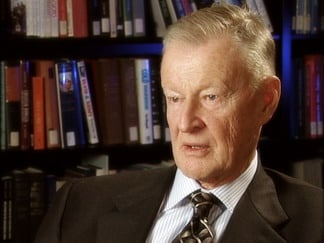 Brzezinski: Yes. According
to the official version of history, CIA aid to the Mujahideen began
during the 1980s, that is to say, after the Soviet army invaded
Afghanistan, 24 December 1979. But the reality, secretly guarded until now, is completely otherwise.
Brzezinski: Yes. According
to the official version of history, CIA aid to the Mujahideen began
during the 1980s, that is to say, after the Soviet army invaded
Afghanistan, 24 December 1979. But the reality, secretly guarded until now, is completely otherwise.
Indeed, it was on July 3, 1979 that President Carter signed the first directive for secret aid to the opponents of the pro-Soviet regime in Kabul. And that very day, I wrote a note to the president in which I explained to him that in my opinion this aid was going to induce a Soviet military intervention.
Q: Despite this risk, you were an advocate of this covert action. But perhaps you yourself desired this Soviet entry into war and looked to provoke it?
B: It isn’t quite that. We didn’t push the Russians to intervene, but we knowingly increased the probability that they would.
Q: When the Soviets justified their intervention by asserting that they intended to fight against a secret involvement of the United States in Afghanistan, people didn’t believe them. However, there was a basis of truth. You don’t regret anything today?
B: Regret what? That secret operation was an excellent idea. It had the effect of drawing the Russians into the Afghan trap and you want me to regret it? The day that the Soviets officially crossed the border, I wrote to President Carter. We now have the opportunity of giving to the USSR its Vietnam war. Indeed, for almost 10 years, Moscow had to carry on a war unsupportable by the government, a conflict that brought about the demoralization and finally the breakup of the Soviet empire.
Q: And neither do you regret having supported the Islamic fundamentalism, having given arms and advice to future terrorists?
B: What is most important to the history of the world? The Taliban or the collapse of the Soviet empire? Some stirred-up Muslims or the liberation of Central Europe and the end of the Cold War?
Q: Some stirred-up Muslims? But it has been said and repeated Islamic fundamentalism represents a world menace today.
B: Nonsense! It is said that the West had a global policy in regard to Islam. That is stupid. There isn’t a global Islam. Look at Islam in a rational manner and without demagoguery or emotion. It is the leading religion of the world with 1.5 billion followers. But what is there in common among Saudi Arabian fundamentalism, moderate Morocco, Pakistan militarism, Egyptian pro-Western or Central Asian secularism? Nothing more than what unites the Christian countries.
*
emphasis added
Translated from French by William Blum
***
As of the early 1980s, the US was actively involved in destroying Afghanistan a prosperous and progressive Muslim country with a secular government.
“Some stirred up Muslims” to use the words of Zbigniew Brzezinski.
Al Qaeda terrorists were recruited by the U.S to destroy and impoverish a country of 38 billion people.


“Phonograph record store.”

“Hundreds of Afghan youngsters take active part in Scout programs.”