Thursday, 4 June 2020

Tuesday, 2 June 2020
“The World Cannot Breathe!” Squashed by the U.S. – A Country Built on Genocide and Slavery: George Floyd Endgame: Martial Law and a Police State: Black Lives Matter: The Perils of Liberal Philanthropy

“The World Cannot Breathe!” Squashed by the U.S. – A Country Built on Genocide and Slavery
Global Research, June 02, 2020
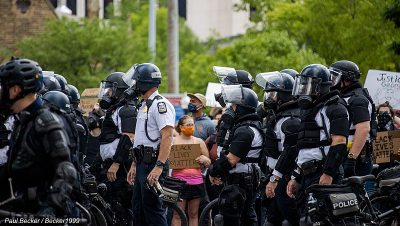
One man’s death triggers an avalanche of rage in those who for years, decades and centuries, have been humiliated, ruined, and exterminated.
It always happens just like this throughout the history of humankind – one single death, one single “last drop”, an occurrence that triggers an entire chain of events, and suddenly nothing is the same, anymore. Nothing can be the same. What seemed to be unimaginable just yesterday, becomes “the new normal” literally overnight.
For more than two centuries, the country which calls itself the pinnacle of freedom, has been in fact the absolute opposite of that: the epicenter of brutality and terror.
From its birth, in order to ‘clear the space’ for its brutal, ruthless European settlers, it systematically liquidated the local population of the continent, during what could easily be described as one of the more outrageous genocides in the human history.
When whites wanted land, they took it. In North America, or anywhere in the world. In what is now the United States of America, millions of “natives” were murdered, infected with deadly diseases on purpose, or exterminated in various different ways. The great majority of the original and rightful owners of the land, vanished. The rest were locked up in “reservations”.
Simultaneously, the “Land Of The Free” thrived on slavery. European colonialist powers literally hunted down human beings all over the African continent, stuffing them, like animals, into ships, in order to satisfy demand for free labor on the plantations of North and South America. European colonialist, hand in hand, cooperated, in committing crimes, in all parts of the world.
What really is the United States? Is anyone asking, searching for its roots? What about this; a simple, honest answer: The United States is essentially the beefy offspring of European colonialist culture, of its exceptionalism, racism and barbarity.
Again, simple facts: huge parts of the United States were constructed on slavery. Slaves were humiliated, raped, tortured, murdered. Oh, what a monstrous way to write the first chapters of the country’s history!
The United States, a country of liberty and freedom? For whom? Seriously! For Christian whites?
How twisted the narrative is! No wonder our humanity has become so perverse, so immoral, so lost and confused, after being shaped by a narrative which has been fabricated by a country that exterminated the great majority of its own native sons and daughters, while getting insanely rich thanks to unimaginable theft, mass-murder, slavery and later – the semi-slavery of the savage corporate dictatorship!
The endemic, institutionalized brutality at home eventually spilled over to all parts of the planet. Now, for many decades, the United Stated has treated the entire world as full of its personal multitude of slaves. What does it offer to all of us: constant wars, occupations, punitive expeditions, coups, regular assassinations of progressive leaders, as well as thorough corporate plunder. Hundreds of millions of people have been sacrificed on the grotesque U.S. altar of “freedom” and “democracy”.
Or perhaps just genocide, slavery, fear and the violation of all those wonderful and natural human dreams, and of human dignity?
*
Then one single death of a man whose neck got crushed by the knee of a ruthless cop. And the country has exploded. Hundreds of thousands of pro-democracy fighters and activists are now flooding the streets of Minneapolis, Washington D.C., New York City, Atlanta, Los Angeles, and other U.S. cities.
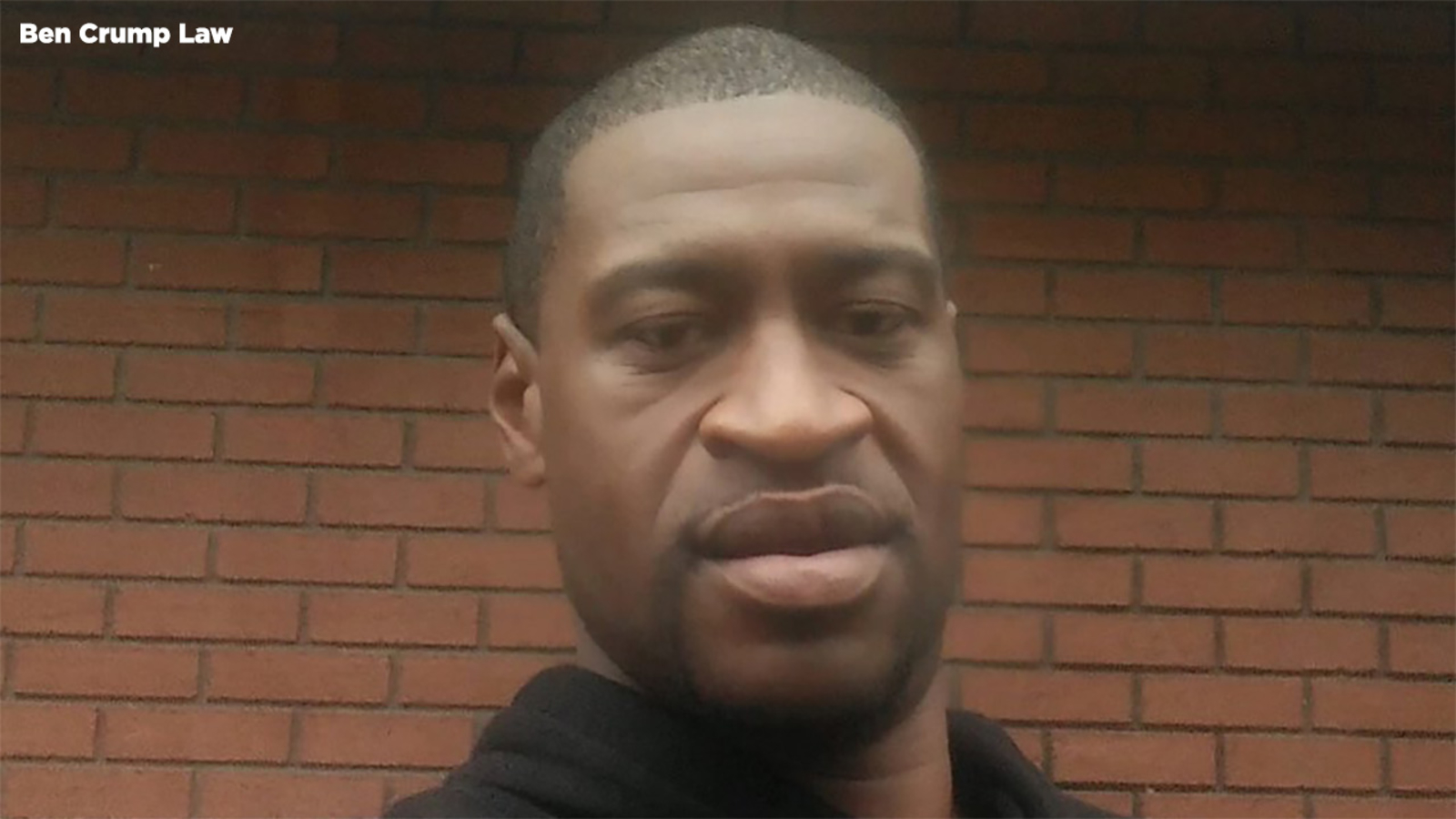
The death of Mr. George Floyd is a symbol, really, as black people get murdered in the most despicable way, almost every day. From January 2015 to date, for instance, 1,250 African-American citizens have been shot and killed by the police, in our democratic U.S.A.
In the “Country of Freedom”, 2.3 million human beings are rotting away alive in the increasingly privatized prisons. The U.S. prisoner rate is the highest in the world. Holding people behind bars is big business. Minorities form a disproportionately high percentage of the detainees.
*
And that is not all. Actually, the entire world has already become one huge prison. Look around: the whole planet is now being monitored, policed in that very special and thorough U.S. way; policed, brutalized, and if it dares to protest – pitilessly chastised.
Essential terms are all being twisted. The country abusing its own people, as well as the entire world, is defined by its own corporate mass media and propaganda system, as “free” and “democratic”. Those nations that are defending their own people against the brutal diktat of the empire, are insulted, called ‘regimes’ and ‘dictatorships’.
I have already described this madness in my 800-page book, “Exposing Lies of the Empire”, after witnessing some of the deadliest trends being spread by the United States in some 160 countries.
The murder of George Floyd unleashed resistance; it opened many eyes. In the United States, and everywhere else. Mr. Floyd, African-Americans, Native Americans and other oppressed people in the United States are brothers and sisters of those billions of men and women who are to this day, colonized, brutalized and murdered by the Empire, all over the world.
Let this be the beginning of a new wave of the global liberation struggle!
Now more and more people can finally see what few of us have been repeating for years: The entire world has its neck squashed by the U.S. boot. The entire world “cannot breathe”! And the entire world has to fight for its right to be able to breathe!
*
Note to readers: please click the share
buttons above or below. Forward this article to your email lists.
Crosspost on your blog site, internet forums. etc.
Andre Vltchek is a
philosopher, novelist, filmmaker and investigative journalist. He has
covered wars and conflicts in dozens of countries. Six of his latest
books are “New Capital of Indonesia”, “China Belt and Road Initiative”,“China and Ecological Civilization” with John B. Cobb, Jr., “Revolutionary Optimism, Western Nihilism”, the revolutionary novel “Aurora” and a bestselling work of political non-fiction: “Exposing Lies Of The Empire”. View his other books here. Watch Rwanda Gambit, his ground-breaking documentary about Rwanda and DR Congo and his film/dialogue with Noam Chomsky “On Western Terrorism”.
Vltchek presently resides in East Asia and Latin America, and continues
to work around the world. He can be reached through his website, his Twitter and his Patreon. He is a frequent contributor to Global Research.
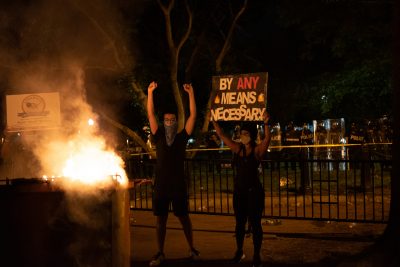
George Floyd Endgame: Martial Law and a Police State
https://www.globalresearch.ca/george-floyd-endgame-martial-law-police-state/5714723
COVID was the first act.
Global Research, June 02, 2020
It is disturbing to hear people who should know better describe the George Floyd
riots as anarchism. The riots are not anarchistic, they are nihilistic.
The people engaged in looting, arson, and widespread assault have zero
comprehension of political philosophy.
There are, of course, a whole lot of people demonstrating who are not involved in crime and violence. However, these are the dupes, the idealists routinely exploited by the state and its propaganda media.
Rampaging “anarchists”—many undoubtedly agent provocateurs—are not interested in justice, fairness, nonviolence, and peaceful dialogue. They are providing a pretext to usher in a fascist police state.
The George Floyd riots are problem-reaction-solution exemplified. After Ronald Reagan initiated his “zero tolerance” drug war, the Pentagon began the process of converting local police departments into “thin blue line” paramilitary gangs paid for by know-nothing taxpayers.
Black-clad militarized American cops—many veterans of the illegal wars in Afghanistan, Iraq, and Syria—view citizens as the enemy. This is drilled into them at the academy and every day on the job. It is a gang mentality.
The propaganda media focus exclusively on the murder of blacks. However, if we consider the statistics, there are numerous victims of police overreaction and sadism who are white. This fact, however, does not serve the agenda, which is the destruction of civil society through irrational political polarization, racism, tribalism, and escalating violence.
This state of affairs will be exploited to call for a clampdown on political dissent. COVID “contact tracing” is now being used to track down activists and those associated with them. Facial recognition is used to find targeted individuals in crowds. From the start, I said this supposed public safety gimmick would be used to isolate and destroy peaceful activism.
Now that police are joining protesters,
the state will turn up the heat. I believe we can expect a false flag
event to justify martial law, primarily imposed in iron-fist fashion in
the larger urban areas of America. In order to dovetail with rhetoric
pushed out by the media elite, the false flag will be pinned on “white
nationalists” and other “extremists” now pigeon-holed by the FBI as far
worse than ISIS or al-Qaeda.
COVID was the first act. It demonstrated that millions of Americans will follow the authoritarian orders of their “representatives” and elected officials. COVID was in part a test run to see how far citizens can be pushed before they react.
The George Floyd riots represent act two of the COVID-spawned lockdowns. 24/7 propaganda media coverage of burning cities and looting of big box stores around the nation have frightened average Americans and pushed a bad seasonal flu to the sidelines.
If the chaos continues, there will be citizen demands for law and order. Either by design or ineptitude, local law enforcement has stood down during the riots, failing to protect lives and property. Officials will argue that the ongoing destruction and violence can only be contained by the military. So serious is the threat, local law enforcement is said to be overwhelmed.
The state has planned this eventuality for decades. After the race riots of the late 1960s, the government established the ADEX list of “subversives,” that is to say activists opposed to the state while simultaneously operating the FBI’s COINTELPRO neutralization campaign against civil rights and antiwar activists.
The ADEX list is the tiny ancestor of today’s Main Core, a database containing personal and financial data on more than a million people. REX-84, Garden Plot, Lantern Spike, and other military operations were put into place to round up activists and enemies of the state, as former congressman Jack Brooks pointed out during the Iran-Contra hearings.
It is not clear what the state will do next as part of its latest and greatest psychological operation against the American people. However, as the COVID “plandemic” demonstrated, all that is needed to keep the plebs in line is fear and division.
Divide et impera—divide and conquer—has been used for centuries by various authoritarian states, long before Niccolò Machiavelli penned his The Art of War.
*

There are, of course, a whole lot of people demonstrating who are not involved in crime and violence. However, these are the dupes, the idealists routinely exploited by the state and its propaganda media.
Rampaging “anarchists”—many undoubtedly agent provocateurs—are not interested in justice, fairness, nonviolence, and peaceful dialogue. They are providing a pretext to usher in a fascist police state.
The George Floyd riots are problem-reaction-solution exemplified. After Ronald Reagan initiated his “zero tolerance” drug war, the Pentagon began the process of converting local police departments into “thin blue line” paramilitary gangs paid for by know-nothing taxpayers.
Black-clad militarized American cops—many veterans of the illegal wars in Afghanistan, Iraq, and Syria—view citizens as the enemy. This is drilled into them at the academy and every day on the job. It is a gang mentality.
The propaganda media focus exclusively on the murder of blacks. However, if we consider the statistics, there are numerous victims of police overreaction and sadism who are white. This fact, however, does not serve the agenda, which is the destruction of civil society through irrational political polarization, racism, tribalism, and escalating violence.
This state of affairs will be exploited to call for a clampdown on political dissent. COVID “contact tracing” is now being used to track down activists and those associated with them. Facial recognition is used to find targeted individuals in crowds. From the start, I said this supposed public safety gimmick would be used to isolate and destroy peaceful activism.
COVID was the first act. It demonstrated that millions of Americans will follow the authoritarian orders of their “representatives” and elected officials. COVID was in part a test run to see how far citizens can be pushed before they react.
The George Floyd riots represent act two of the COVID-spawned lockdowns. 24/7 propaganda media coverage of burning cities and looting of big box stores around the nation have frightened average Americans and pushed a bad seasonal flu to the sidelines.
If the chaos continues, there will be citizen demands for law and order. Either by design or ineptitude, local law enforcement has stood down during the riots, failing to protect lives and property. Officials will argue that the ongoing destruction and violence can only be contained by the military. So serious is the threat, local law enforcement is said to be overwhelmed.
The state has planned this eventuality for decades. After the race riots of the late 1960s, the government established the ADEX list of “subversives,” that is to say activists opposed to the state while simultaneously operating the FBI’s COINTELPRO neutralization campaign against civil rights and antiwar activists.
The ADEX list is the tiny ancestor of today’s Main Core, a database containing personal and financial data on more than a million people. REX-84, Garden Plot, Lantern Spike, and other military operations were put into place to round up activists and enemies of the state, as former congressman Jack Brooks pointed out during the Iran-Contra hearings.
It is not clear what the state will do next as part of its latest and greatest psychological operation against the American people. However, as the COVID “plandemic” demonstrated, all that is needed to keep the plebs in line is fear and division.
Divide et impera—divide and conquer—has been used for centuries by various authoritarian states, long before Niccolò Machiavelli penned his The Art of War.
*
Note to readers: please click the share
buttons above or below. Forward this article to your email lists.
Crosspost on your blog site, internet forums. etc.
Kurt Nimmo writes on
his blog site, Another Day in the Empire, where this article was
originally published. He is a frequent contributor to Global Research.
Black Lives Matter: The Perils of Liberal Philanthropy
Global Research, June 02, 2020
Jacobin 26 November 2018
This carefully research article first published in 2016 shows that Black Lives Matter has
been funded by philanthropists and corporate foundations including
Soros’ Open Society Initiative and the Ford Foundation which has links
to the CIA.
The underlying objective is ultimately to control Black Power.
How can activists take an effective and meaningful stance against neoliberalism and racism when their NGO is funded by the financial establishment.
“Manufactured Dissent”. The philanthropists are “funding dissent” with a view to controlling dissent.
The Rockefellers, Ford et al have funded the “anti-globalization movement” from the very outset of the World Social Forum (WSF).
The WSF is said to have transformed progressive movements, leading to what is described as the emergence of the “Global Left”. Nonsense.
Wall Street foundations support the protest movement against Wall Street? How convenient.
We are dealing with a network of corporate funding of so-called “progressive” organizations. This networking of funding dissent is a powerful instrument.
Real progressive movements have been shattered, largely as a result of the funding of dissent.
The Movement for Black Lives has started turning to foundations for funding. But the history of the Black Power movement offers a cautionary tale about the warping effects of liberal philanthropy’s soft power.
***
In 2016, the Ford Foundation, the nation’s second-largest philanthropic foundation, announced a major new initiative to support the Movement for Black Lives — the network of fledgling organizations that coalesced as #blacklivesmatter to protest the police killing of black people across the US.
Offering over $40 million in “capacity”-strengthening funding to M4BL organizations over six years, the foundation’s support came at a new stage for Black Lives Matter. Moving beyond protest to institutionalize its social vision, the Movement for Black Lives had crafted an ambitious policy platform to take on state violence writ large. Ford’s announcement followed its work with (and $1.5 million donation to) Borealis Philanthropy, which in 2015 established the Black-led Movement Fund to attract and consolidate major gifts from other liberal funders, most notably George Soros’s Open Society Foundations, and support the movement even longer term.
But there was a catch: foundation officers framed their support of M4BL as a response to the murder of police officers in Dallas and Baton Rouge during a period of otherwise nonviolent protests against the police killings of two black men, Philando Castile and Alton Sterling. Highlighting the “larger democratic principles at play,” Ford officials explained that the
The statement was
striking: couching its funding commitment as a reaction to instances of
black, not state, violence; as an affirmation of its ongoing faith in
the role of the police in American liberal democracy; and as a
color-blind statement that “all lives matter.” Each formulation
contradicted Black Lives’ baseline assumption of endemic, racialized
state violence undergirding American society and political economy.The
Ford Foundation’s comments suggest that dominant liberal philanthropies
are engaging today’s black freedom struggle from a very different place
than their grantees — not from a position of black liberation and
radical struggle, but from one of pacification and liberal reform. This
subordination of black freedom to the stability of the nation puts the
foundation in direct ideological conflict with the Movement for Black
Lives — just as it did fifty years ago, in another moment of black insurgency.For all that is rightly heralded as new about Black Lives Matter
— its impressive use of social media as a mobilizing tool, its
disruption of dominant narratives about race and justice, the presence
of queer women among its leading strategists and organizers — the
movement shares much with the Black Power movement of the 1960s. Both
were and are dominated by young people responding to racial oppression,
unmoved by the liberal measures promoted by established black leaders.
Both interpreted and interpret their oppression through a wide,
oppositional lens that demands no less than social and structural transformation.
And elements in both movements made and are making the calculation that
in an environment of iron-fisted “law and order,” the velvet glove of
liberal philanthropy can provide a helping hand.
Given these similarities, the Ford Foundation’s funding of Black
Power serves as a cautionary tale to black freedom organizations today.
Black Power activists believed they were entering their relationship
with foundations with their eyes wide open. They were smart,
strategically minded activists. Yet they didn’t fully appreciate the
distance between their social vision and the Ford Foundation’s — or the
warping effects of liberal philanthropy’s soft power.
Managing the “American Dilemma”

In 1966, the Ford Foundation’s new president, McGeorge Bundy,
announced that the organization would forge a different path for
American philanthropy, turning the foundation’s primary domestic focus
to issues of what it called “Negro equality.” The rash of urban
uprisings the previous year — coinciding with the Voting Rights Act,
which many liberals thought signaled the end of racial inequality — had
sent the foundation into full crisis mode. The famed organization had
played an instrumental role in conceiving of and piloting key programs
of Lyndon Johnson’s Great Society, and it understood better than most
liberal institutions the depth of black alienation in the United
States.Bundy warned that with the rise of Black Power the United States
was imperiled by a “true social revolution at home,” requiring a
response at the “level of effort . . . we now make as a nation in Vietnam.” Taking on this national threat, he argued, would require embracing liberal reform — exemplified by the Ford Foundation — to “right these ancient wrongs, and . . . by peaceful means.” In keeping with previous liberal elites, Bundy sought to manage the periodic threat to the nation caused by the American “dilemma”
of racial inequality.So what did Bundy’s foundation do to manage black
insurgency on behalf of the nation? He and his officers settled on a
counterintuitive policy: black assimilation through racial separatism. A
latter-day version of “separate but equal,” this approach advocated
continuing the isolation of urban ghettoes until these neighborhoods
could be revitalized. Then, the argument went, the residents would be on
firmer ground to spring into the mainstream of American society, fully
assimilated.
But Bundy and
his officers had a problem. Thanks to the political achievements of the
black freedom movement, they couldn’t simply impose their will. They had
to find a non-disruptive way to represent the African-American public
in the nation. Their solution was to foster the creation of a new black
leadership class that could broker for the black poor from within the
American establishment — a kind of elite pluralism that would at once
demonstrate the nation was living up to its egalitarian ideals and
dampen black insurgency.This program intersected with the black activism
of the time in many ways, including its advocacy of racial separatism,
black economic development, cultural revitalization, and strong black
leadership. Even more disarming for its Black Power grantees, the Ford
Foundation used the language of colonialism to describe
African-Americans’ position and suggested that its grants program for
black Americans was one of decolonization.Supporters and critics alike
saw Bundy as a daring iconoclast for consorting with black radicals and
regarded his foundation as a “change agent.” But neither fully
understood the kind of postcolonial order Bundy had in mind.
Holding the Strings
From 1966 until
the mid-1970s, Bundy’s foundation led the way on social development,
partnering with other elite liberals and black activists on a number of
initiatives that are today considered among Black Power’s major
legacies.The foundation helped plan and underwrite black community
control school demonstrations in New York City, including the infamous one in Brooklyn’s Ocean Hill-Brownsville, and funded the Black Power incarnation of the Congress of Racial Equality. It pioneered the community development corporation,
a model that continues to predominate in public-private efforts to spur
economic growth in inner-city neighborhoods. And it bankrolled
all-black and even radically Afrocentric performing arts organizations
for the cultural uplift of ghetto residents.Yet despite their high
profile, these initiatives did little to mitigate the plight of poor
urban communities. Working from the postwar liberal premise that
economic and political power were unlimited in the US — bottomless
resources that, with minor fixes, could be shared without conflict among
all members of society — the foundation looked to black behavioral
pathology, rather than structural racism, as the primary source of
racial inequality. The foundation’s nationalism and racial ideology thus
prevented it from gaining a clear-sighted understanding of the problem,
let alone its solution.
And it enforced that myopic understanding with pecuniary discipline.
When grantees betrayed the foundation’s social vision or agenda, they
got cut off. The most overtly liberationist Black Power beneficiaries,
like those in Cleveland CORE and New York’s community control movement,
saw their funding slashed or curtailed when their demands and actions
for self-determination created more, rather than less, social conflict.
Increasingly, the foundation became more partial to the cultural wing of Black Power, which was often involved in less contentious endeavors. But even in these cases, more radical projects, like that of the leftist theater director Douglas Turner Ward and his Negro Ensemble Company, faced a funding hammer that relentlessly chipped away at their aims for social transformation.
Out of the
rubble of this experimentation, the Ford Foundation found the right
vehicle for its assimilationist goals. While it institutionalized black
arts and black studies within the nation’s cultural and educational
establishment, Bundy’s foundation also promoted a program of black
leadership development (fostered through initiatives like making
community development corporations the incubators of black “public
entrepreneurs”) and an ambitious college scholarship program (which
played a significant role in expanding the black professional
class).These efforts — not liberationist ventures that butted up against
the foundation’s conciliatory ethos — were the concrete and lasting
accomplishments of the Ford Foundation’s efforts. In fact, this model of elite affirmative action paved a path of least resistance against the claims of Black Power, one that would be followed by the federal government (starting with the Nixon administration),
corporate America, and public and private institutions across the
United States.By that point, the foundation had long since abandoned any
remnant of an ambitious social-development agenda. Despite ongoing
ghettoization, the nation-threatening conflict and disorder of the riots
had faded away — and so had the urgency of dealing with the fundamental
problems facing inner-city communities. The foundation’s goal was
clear: fostering individual minority leadership to ensure that, in spite
of ongoing racial inequality, African Americans could be represented
appropriately in the nation’s public life.
It had thus found its answer to the problem of racial inequality, and
the nation had been saved once again from the fundamental contradiction
between the liberal creed and social reality.
The Limits of Liberal Philanthropy
The Ford
Foundation’s engagement with Black Power proved to be at best
constricting and at worst destructive for most of its grantees. It
spawned a new regime of race management that has served the nation’s elites, not black freedom. It helped lay the seed for the “progressive neoliberalism,” which celebrates elite multiculturalism and promotes “diversity” while ignoring or masking structural inequalities.Nevertheless,
there are good reasons why black activists took the money, then and
now. For one thing, it’s hard to turn down such magnificent sums. For
another, the Ford Foundation is one of the few foundations (and by far the richest)
ready to fund black activism. One could even argue that progressive
social movements can’t afford to reject philanthropic funding because
they have to compete in a plutocratic political environment shaped by the ideological convictions of conservative billionaires and grandiose schemes of high-tech magnates.
For example, criminal justice reformers have worked with George Soros,
Ford’s partner in the Black-led Movement Fund, who has helped bankroll
their efforts.But foundation imperatives will likely clip the wings of
radical dreamers today, just as they did in the 1960s and ’70s.

Again, the Ford Foundation is instructive. The foundation’s current president, Darren Walker, is the embodiment of its decades-long strategy of elite racial liberalism. Walker, a black, gay Southerner who was born in poverty, rode the “mobility elevator,” as he put it, “fast and hard, and as far as I wanted to go,” to become a lawyer, investment banker, and philanthropic leader, thanks in part to the Great Society’s Head Start and Pell Grants program. He leads an organization whose senior staff and trustees are remarkably diverse in terms of race, gender, and sexuality (and who haven’t had a white male president since Bundy resigned in 1979).
To his credit, Walker is working hard to make the foundation’s elite multiculturalism finally bear fruit for more than a fortunate few. In 2015, he positioned the foundation outside of the philanthropic mainstream by refocusing all of its grant-making to address the causes and consequences of inequality, dedicating $1 billion to the effort. In announcing this shift, he declared a “new gospel of wealth” in which he frankly acknowledged that the fortunes that create philanthropy are deeply implicated in inequality, and urged his fellow philanthropists to ask, “Why are we still necessary?” The foundation has since broken with its formerly ironclad financial orthodoxy by investing a small percentage of its endowment for social impact, not just financial return.
Walker’s foundation is also notably humble in this age of overbearing, top-down “strategic” philanthropy by Silicon Valley “disruptors”; unlike many of his peers he refutes the philanthropist’s fantasy that “foundations are central protagonists in the story of social change, when, really, we are the supporting cast.” Following up on this credo, the foundation has offered long-term institutional support to “anchor” organizations, like M4BL, and then promised to step back, offering the grantees security and freedom from the “proposal economy” that sucks up the energy and so often redirects the program and mission of nonprofits. In the world of philanthropy these are not trivial interventions, and Walker’s leadership deserves some praise.
But McGeorge Bundy also stretched the limits of philanthropy’s innate conservatism by expanding the range of its social responsibility, dabbling in social investment and promising not to interfere in the work of the foundation’s Black Power grantees. And despite its brave talk about philanthropists’ connection to inequality, Walker’s “gospel” includes an “obligation to capitalism,” in which he dreams of “bridg[ing] the philosophies of [Adam] Smith, and [Andrew] Carnegie, and [Martin Luther] King,” by “bending the demand curve toward justice” — a heretical blending of market fundamentals with the maxim King made famous. Needless to say, he doesn’t reckon with King’s later understanding of the intertwining of American capitalism and racial inequality, an understanding at the core of M4BL’s platform.
Walker asks his fellow philanthropists to “leverage our privilege to disrupt the levers of inequality,” not to eliminate either the privilege or the levers. No matter how multicultural its leadership or reformist its agenda, the Ford Foundation and liberal philanthropy writ large remain within and committed to the systems that spawned their creation and that undergird the American political economy. As many Black Power activists learned fifty years ago, immersion into that liberal funding stream can inexorably redirect their quest for freedom.
*
The underlying objective is ultimately to control Black Power.
How can activists take an effective and meaningful stance against neoliberalism and racism when their NGO is funded by the financial establishment.
“Manufactured Dissent”. The philanthropists are “funding dissent” with a view to controlling dissent.
The Rockefellers, Ford et al have funded the “anti-globalization movement” from the very outset of the World Social Forum (WSF).
The WSF is said to have transformed progressive movements, leading to what is described as the emergence of the “Global Left”. Nonsense.
Wall Street foundations support the protest movement against Wall Street? How convenient.
We are dealing with a network of corporate funding of so-called “progressive” organizations. This networking of funding dissent is a powerful instrument.
Real progressive movements have been shattered, largely as a result of the funding of dissent.
A campaign is ongoing across America. Black Lives Matter
(which is playing a key role in combating racism and the police state)
is funded by the same financial interests which are behind the deadly
lockdown: WEF, Gates Foundation, Rockefeller et al.
The closure of the US economy supported by Big Money has
been conducive to mass unemployment and despair. A meaningful “mass
movement” against racism and social inequality cannot under any
circumstances be funded by Big Money foundations.
To put it bluntly: You cannot organize a mass movement
against the Empire and then ask the Empire to pay for your travel
expenses.
Michel Chossudovsky, June 2, 2020
***The Movement for Black Lives has started turning to foundations for funding. But the history of the Black Power movement offers a cautionary tale about the warping effects of liberal philanthropy’s soft power.
***
In 2016, the Ford Foundation, the nation’s second-largest philanthropic foundation, announced a major new initiative to support the Movement for Black Lives — the network of fledgling organizations that coalesced as #blacklivesmatter to protest the police killing of black people across the US.
Offering over $40 million in “capacity”-strengthening funding to M4BL organizations over six years, the foundation’s support came at a new stage for Black Lives Matter. Moving beyond protest to institutionalize its social vision, the Movement for Black Lives had crafted an ambitious policy platform to take on state violence writ large. Ford’s announcement followed its work with (and $1.5 million donation to) Borealis Philanthropy, which in 2015 established the Black-led Movement Fund to attract and consolidate major gifts from other liberal funders, most notably George Soros’s Open Society Foundations, and support the movement even longer term.
But there was a catch: foundation officers framed their support of M4BL as a response to the murder of police officers in Dallas and Baton Rouge during a period of otherwise nonviolent protests against the police killings of two black men, Philando Castile and Alton Sterling. Highlighting the “larger democratic principles at play,” Ford officials explained that the
“officers died while protecting the right to freedom of expression and peaceful protest, and are inexorably linked to Philando Castile and Alton Sterling.” These moments of violence, they warned, had “the potential to either deepen empathy and understanding among Americans or divide us even more sharply along lines of race, ethnicity, and gender . . . Now is the time to stand by and amplify movements rooted in love, compassion, and dignity for all people.”
Managing the “American Dilemma”
Increasingly, the foundation became more partial to the cultural wing of Black Power, which was often involved in less contentious endeavors. But even in these cases, more radical projects, like that of the leftist theater director Douglas Turner Ward and his Negro Ensemble Company, faced a funding hammer that relentlessly chipped away at their aims for social transformation.
The Limits of Liberal Philanthropy
Again, the Ford Foundation is instructive. The foundation’s current president, Darren Walker, is the embodiment of its decades-long strategy of elite racial liberalism. Walker, a black, gay Southerner who was born in poverty, rode the “mobility elevator,” as he put it, “fast and hard, and as far as I wanted to go,” to become a lawyer, investment banker, and philanthropic leader, thanks in part to the Great Society’s Head Start and Pell Grants program. He leads an organization whose senior staff and trustees are remarkably diverse in terms of race, gender, and sexuality (and who haven’t had a white male president since Bundy resigned in 1979).
To his credit, Walker is working hard to make the foundation’s elite multiculturalism finally bear fruit for more than a fortunate few. In 2015, he positioned the foundation outside of the philanthropic mainstream by refocusing all of its grant-making to address the causes and consequences of inequality, dedicating $1 billion to the effort. In announcing this shift, he declared a “new gospel of wealth” in which he frankly acknowledged that the fortunes that create philanthropy are deeply implicated in inequality, and urged his fellow philanthropists to ask, “Why are we still necessary?” The foundation has since broken with its formerly ironclad financial orthodoxy by investing a small percentage of its endowment for social impact, not just financial return.
Walker’s foundation is also notably humble in this age of overbearing, top-down “strategic” philanthropy by Silicon Valley “disruptors”; unlike many of his peers he refutes the philanthropist’s fantasy that “foundations are central protagonists in the story of social change, when, really, we are the supporting cast.” Following up on this credo, the foundation has offered long-term institutional support to “anchor” organizations, like M4BL, and then promised to step back, offering the grantees security and freedom from the “proposal economy” that sucks up the energy and so often redirects the program and mission of nonprofits. In the world of philanthropy these are not trivial interventions, and Walker’s leadership deserves some praise.
But McGeorge Bundy also stretched the limits of philanthropy’s innate conservatism by expanding the range of its social responsibility, dabbling in social investment and promising not to interfere in the work of the foundation’s Black Power grantees. And despite its brave talk about philanthropists’ connection to inequality, Walker’s “gospel” includes an “obligation to capitalism,” in which he dreams of “bridg[ing] the philosophies of [Adam] Smith, and [Andrew] Carnegie, and [Martin Luther] King,” by “bending the demand curve toward justice” — a heretical blending of market fundamentals with the maxim King made famous. Needless to say, he doesn’t reckon with King’s later understanding of the intertwining of American capitalism and racial inequality, an understanding at the core of M4BL’s platform.
Walker asks his fellow philanthropists to “leverage our privilege to disrupt the levers of inequality,” not to eliminate either the privilege or the levers. No matter how multicultural its leadership or reformist its agenda, the Ford Foundation and liberal philanthropy writ large remain within and committed to the systems that spawned their creation and that undergird the American political economy. As many Black Power activists learned fifty years ago, immersion into that liberal funding stream can inexorably redirect their quest for freedom.
*
Note to readers: please click the share
buttons above or below. Forward this article to your email lists.
Crosspost on your blog site, internet forums. etc.
Karen Ferguson is associate professor of history and urban studies at Simon Fraser University and author of Top Down: The Ford Foundation, Black Power, and the Reinvention of Racial Liberalism and Black Politics in New Deal Atlanta.

Evangelical Pastor in Rome Says Christians Must ‘Gently Challenge’ Roman Catholicism With the Word of God : Leonardo De Chirico is the pastor of Breccia di Roma and leader of the Reformanda Initiative
Photo Credit: Screenshot YouTube/Ligonier Ministries
Evangelical Pastor in Rome Says Christians Must ‘Gently Challenge’ Roman Catholicism With the Word of God
https://christiannews.net/2020/06/02/evangelical-pastor-in-rome-says-christians-must-gently-challenge-roman-catholicism-with-the-word-of-god/
ROME — An evangelical pastor in Rome says that Christians must “gently challenge” Roman Catholicism with the word of God rather than blindly uniting with the Vatican, as “the Reformation is not over [and] the gospel is still at stake.”
Leonardo De Chirico, the pastor of Breccia di Roma, leader of the Reformanda Initiative, and the Vice Chairman of the Italian Evangelical Alliance, recently penned an article for his site “Vatican Files,” entitled “Why Evangelicals Must Engage Roman Catholicism.”
He said that one of the reasons Evangelicals must engage Roman Catholicism is because it is so pervasive and prevalent among the culture. De Chirico noted that the 2020 edition of the Pontifical Yearbook estimates that Catholics worldwide number 1.329 billion and thus comprise the largest religious group in the world.
The Vatican and its “pope” — a word that is derived from the Latin and Greek, meaning “papa” or “father” — frequently are in the media spotlight, being a major voice regarding interfaith relations and ecumenism, the environment, poverty and so forth.
ROME — An evangelical pastor in Rome says that Christians must “gently challenge” Roman Catholicism with the word of God rather than blindly uniting with the Vatican, as “the Reformation is not over [and] the gospel is still at stake.”
Leonardo De Chirico, the pastor of Breccia di Roma, leader of the Reformanda Initiative, and the Vice Chairman of the Italian Evangelical Alliance, recently penned an article for his site “Vatican Files,” entitled “Why Evangelicals Must Engage Roman Catholicism.”
He said that one of the reasons Evangelicals must engage Roman Catholicism is because it is so pervasive and prevalent among the culture. De Chirico noted that the 2020 edition of the Pontifical Yearbook estimates that Catholics worldwide number 1.329 billion and thus comprise the largest religious group in the world.
The Vatican and its “pope” — a word that is derived from the Latin and Greek, meaning “papa” or “father” — frequently are in the media spotlight, being a major voice regarding interfaith relations and ecumenism, the environment, poverty and so forth.
De Chirico noted that while the Vatican is much friendlier toward Evangelicals than the days when it vehemently opposed the teachings of the Protestant Reformation: the authority and sufficiency of Scripture — sola Scriptura — and salvation being a free gift from Christ through grace and not of works — sola Christus, sola gratia, sola fide — it still rejects those doctrines in their purity.
“Roman Catholicism is still not committed to Scripture alone, Christ alone, or faith alone, and its devotions are not dedicated to God alone,” De Chirico said. “The Roman Catholic gospel is different from the biblical one.”
“None of the non-biblical dogmas, practices, and structures have been obliterated, although they may have been reframed or developed,” he outlined. “The Reformation is not over, the gospel is still at stake, and all those who want to stand firm in the truth should grasp at least something of what Roman Catholicism stands for.”

175. Why Evangelicals Must Engage Roman Catholicism
It’s a Global Issue
Wherever you go in the world – North and South, East and West – you will find people who call themselves Roman Catholics and with whom all of us will interact in one way or another on matters of faith. You will also encounter the Roman Catholic Church through its institutions and agencies: parishes, schools, hospitals, charities, movements, etc. According to the 2020 edition of the Pontifical Yearbook, Catholics around the world amount to 1.329 billion people, by far the largest religious family within Christendom and the biggest religious organization on the planet. The Pope, though living in Rome, is a global figure who attracts a lot of attention from the media. The Roman Church, through its documents and initiatives, is a world-level player in major debates related to inter-faith relationships, mission, the environment, ecumenism, etc. Whether you live in a majority Roman Catholic region or in an area where Catholics are few, the presence of the Roman Catholic Church is pervasive. Unless you crouch in your little corner, not wanting to engage the world around you (wherever you are), you must deal with Roman Catholicism.
It’s a Theological Issue
In the 16th century, the Protestant Reformation was a movement of God that recovered and reaffirmed the biblical gospel centered on the authority of the Triune God in biblical revelation (Scripture Alone); the sufficiency of the work of Jesus Christ (Christ Alone); the free gift of salvation for those who believe (Faith Alone); and the call to live for God and worship Him in whatever we do (To God Alone be the Glory). Roman Catholicism stood against these truths and condemned those who embraced them. After Vatican II, Rome has somewhat changed its posture; the tones are friendlier and the lines are blurred. However, Roman Catholicism is still NOT committed to Scripture alone, Christ alone, or faith alone, and its devotions are not dedicated to God alone. The Roman Catholic gospel is different from the biblical one. None of the non-biblical dogmas, practices, and structures have been obliterated, although they may have been reframed or developed. The Reformation is not over, the gospel is still at stake, and all those who want to stand firm in the truth should grasp at least something of what Roman Catholicism stands for.
It’s an Evangelistic Issue
Because of the massive number of Roman Catholics around the world, there is a high probability that all of us have neighbours, friends, family members, and colleagues who are such. In majority Roman Catholic contexts, this often means that people identify themselves as Catholics because they were born into a religious family or because the cultural milieu they live in was shaped by Roman Catholicism, but there is no basic gospel awareness. Many Catholics believe and behave like most Western secular people do: without any sense of God being real and true in their lives. In other words, they are not born again, regenerated Christians. Devout Catholics may be religious, yet entangled in traditions and practices that are far from the biblical faith. This brings wide-open evangelistic opportunities. The gospel can and must be taken to them too. We must try to enter the Roman Catholic mindset and gently challenge it with the gospel. In order to do so in a spiritually intelligent way, we must come to terms with what Roman Catholicism is all about.
It’s a Trying Issue
Roman Catholicism brings a further challenge to evangelicals today. In the past, Rome considered other forms of Christianity (e.g. Eastern Orthodox and Protestants) as heretical or schismatic; it was Rome that distanced outsiders from itself. After Vatican II (1962-1965) they are thought of as being still defective but “imperfectly united” with Rome. Rome has become very ecumenical, wanting to come alongside other Christians in order to bring them cum Petro (“with Peter”, i.e. in peace with the Catholic Church) and sub Petro (“under Peter”, i.e. somehow embraced by its structures). The same is true with other religions. Prior to Vatican II they were condemned as pagan and heathen; now they are viewed as legitimate ways to God and their followers are called “brothers and sisters”. Rome is working hard to bring all religions together around its leader, the Pope. This is no conspiracy theory: it is the universalist agenda of present-day Roman Catholicism which has been in operation since Vatican II. Evangelicals should be aware of where Rome is going. We don’t want to become part of a “catholic” project that curtails gospel mission aimed at the conversion to Jesus Christ of people who do not believe in Him. The unity we aspire to is the unity of God’s people under the Lord Jesus, not the generic unity of the whole of mankind under Rome.
For missiological, theological, evangelistic, and strategic reasons, Evangelicals must engage Roman Catholicism in today’s world.
About
 Vatican Files is a project of the Reformanda Initiative.
We exist to identify, unite, equip, and resource evangelical leaders to
understand Roman Catholic theology and practice, to educate the
evangelical Church and to communicate the Gospel.
Vatican Files is a project of the Reformanda Initiative.
We exist to identify, unite, equip, and resource evangelical leaders to
understand Roman Catholic theology and practice, to educate the
evangelical Church and to communicate the Gospel.Bio
Leonardo De Chirico (1967) planted and pastored an Evangelical church
in Ferrara (northern Italy) from 1997 to 2009. Since 2009 he has been
involved in a church planting project in Rome and is now pastor of the
church Breccia di Roma (www.brecciadiroma.it ). Additionally, Leonardo is the Director of the Reformanda Initiative,
which aims to equip evangelical leaders to better understand and engage
with Roman Catholicism, and the leader of the Rome Scholars Network
(RSN).He earned degrees in History (University of Bologna), Theology (ETCW, Bridgend, Wales) and Bioethics (University of Padova). His PhD is from King’s College (London) and it was published as Evangelical Theological Perspectives on Post-Vatican II Roman Catholicism (Bern-Oxford: Peter Lang 2003).
Read full bio and bibliography
When the beast of Revelation 17 went to pick the whore of Revelations 17 for a ride: Trump continues religious focus amid George Floyd riots with visit to John Paul II shrine
MUST READ:
When make America great Again meant , make America, racist, sexist, Anti-poor and predatory Again:Trump is an avowed sinner – so why did American evangelicals vote for him?
https://watchmanafrica.blogspot.com/2016/11/when-make-america-great-again-meant.html
THE NEW ROMAN EMPIRE: The Catholic Church is the Whore of Revelation 17:4 and USA is the Beast of Daniel 7:7, Revelations 17:3 :Similarities between Washington DC and Rome: Did you know that Washington DC was once called Rome?
When USA the 4th Beast of Daniel 7:7 Ordered its client the British Government to Detain Julian Asange: Assange Could Die in Prison, There Is No Time to Lose: Civil Liberty Vanishes. Free Assange. Suppressing Legitimate Dissent
https://watchmanafrica.blogspot.com/2020/05/when-usa-4th-beast-of-daniel-77-ordered.htmlThe Horrific Minneapolis Police Killing of George Floyd: Drug Policy Alliance Statement. Law Enforcement Aggression, Assault and Killing of Black People, Using Drugs as a Cover, Must End
Uproar in US after black man George Floyd dies as white policeman kneels on neck: Is being black in America a death sentence??
Trump continues religious focus amid unrest with visit to John Paul II shrine
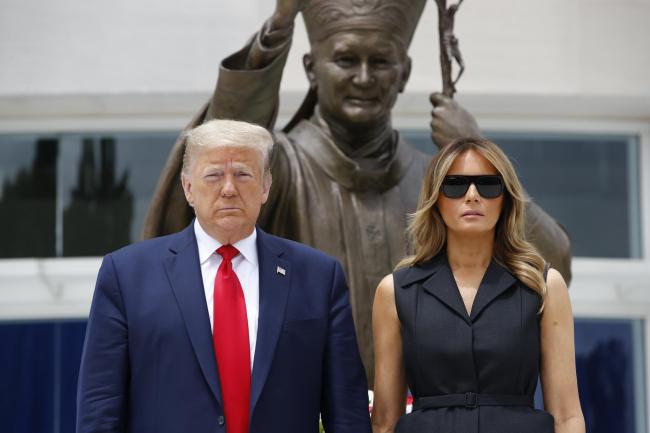
Donald Trump has toured a Catholic
shrine in his second straight religious-themed appearance as the nation
grappled with widespread unrest over the death of George Floyd in
Minneapolis.
Critics said the president was misusing religious
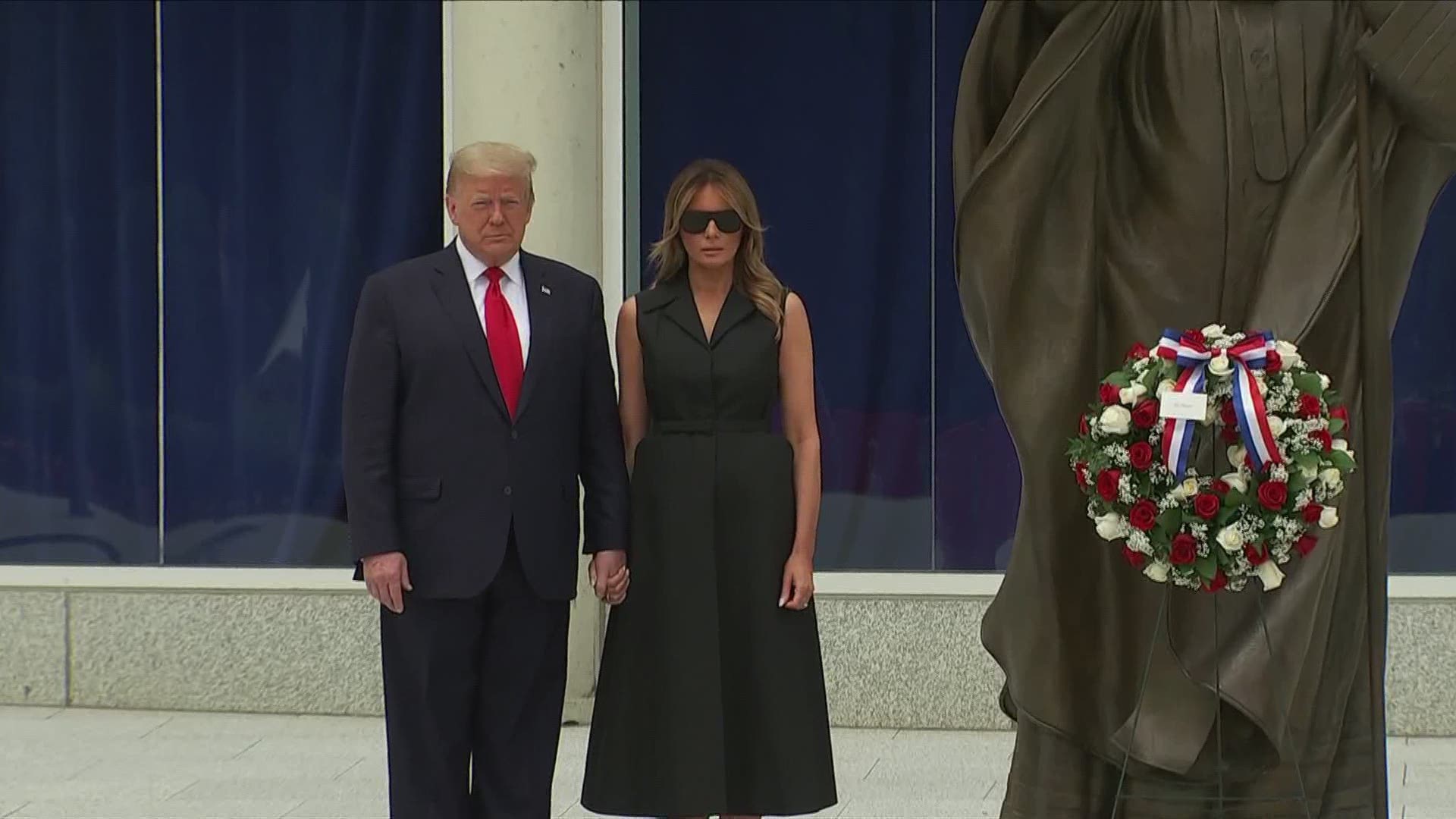
symbols for partisan purposes, but the White House said Mr Trump and
first lady Melania Trump were observing a “moment of remembrance”,
laying a wreath in a quiet visit to the Saint John Paul II National
Shrine in Washington DC.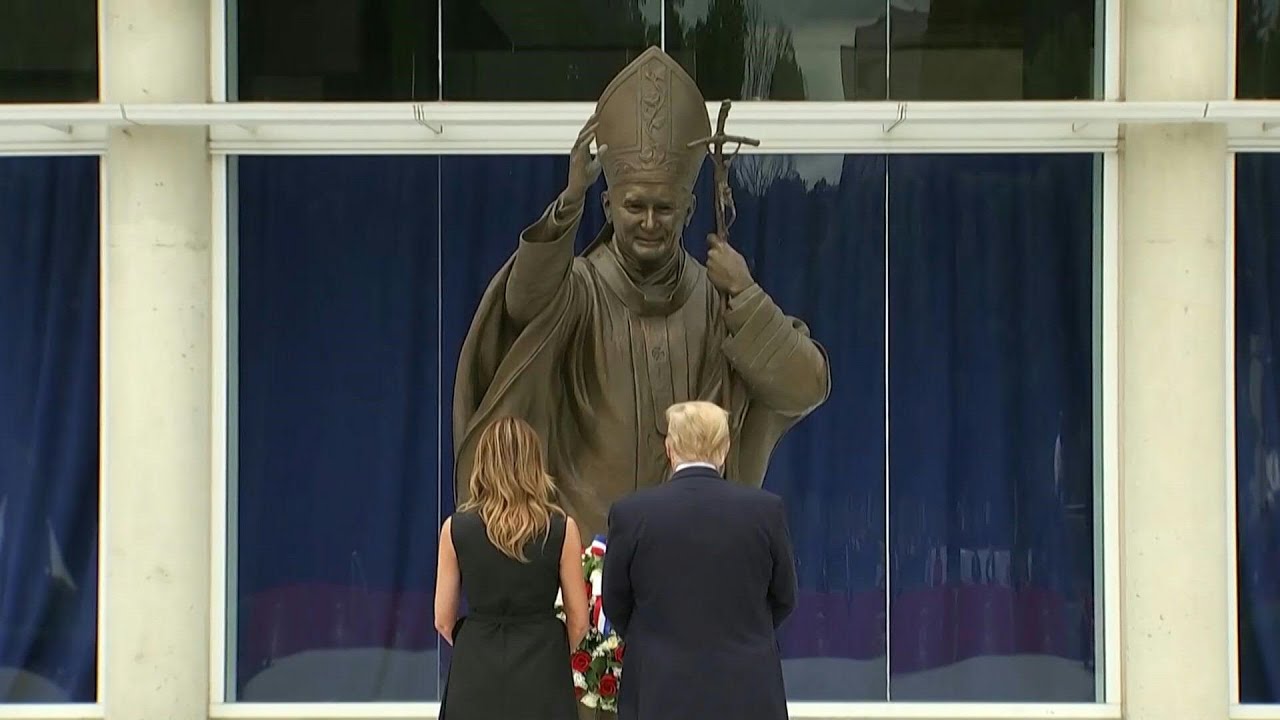
The visit came a day after Mr Trump declared himself the “president of law and order” and then walked to St John’s Episcopal Church across from the White House after Lafayette Park was forcibly cleared of protesters.
He held up a Bible for photos in front of the church, known as the Church of the Presidents, which had been damaged by fire during weekend protests.

On Tuesday’s drive to the shrine, Mr Trump’s motorcade sped past onlookers, some of whom booed, held “Black Lives Matter” signs or made obscene gestures.
On Monday evening, he had appeared in the White House Rose Garden and threatened to deploy the military across the country to quell sometimes-violent unrest sparked by Mr Floyd’s death.
Mr Trump made his declaration to the sound of tear gas clearing largely peaceful protesters from Lafayette Park.
On Tuesday, Washington Archbishop Wilton D Gregory said he was “baffled” by Mr Trump’s visit to the shrine and called it “reprehensible that any Catholic facility would allow itself to be so egregiously misused and manipulated in a fashion that violates our religious principles, which call us to defend the rights of all people even those with whom we might disagree”.
Mr Gregory said the late pope was an “ardent defender” of human rights, adding: “He certainly would not condone the use of tear gas and other deterrents to silence, scatter or intimidate them for a photo opportunity in front of a place of worship.”

He offered little recognition of the anger coursing through the country as he demanded a harsher crackdown on the mayhem that has erupted.
Mr Floyd died after a white Minneapolis police officer pinned him down and pressed his neck with his knee as the man pleaded that he could not breathe.
On Tuesday, the state of Minnesota filed a human rights complaint against Minneapolis Police Department in the death of Mr Floyd.
Violent demonstrations have raged in scores of American cities, marking a level of unrest unseen for decades.
The church stop and Rose Garden speech followed a video teleconference Mr Trump held on Monday morning with governors, during which he derided them as ineffective in dealing with protests.
“Most of you are weak,” he said. “It’s like a war. And we will end it fast. Be tough.”
Arlington County, Virginia, pulled its officers out of the District of Columbia on Monday night after they played a supporting role in forcibly clearing protesters from Lafayette Park.
The County Board issued a statement saying its officers were used “for a purpose not worthy of our mutual aid obligations”.
Chairwoman Libby Garvey said she was “appalled” that the mutual aid agreement was abused “for a photo op”.
Some state governors are also rejecting Mr Trump’s request to send National Guard troops to Washington DC for a massive militarised show of force in the nation’s capital.
At least three states — New York, Virginia and Delaware — have so far rejected the request, with at least one governor citing Mr Trump’s rhetoric about using troops to “dominate” protesters as a reason why. All of those states are led by Democrats. Several other states are sending troops to Washington.
On Tuesday, a Republican senator spoke out Mr Trump’s use of the Bible “as a political prop”.
“There is no right to riot, no right to destroy others’ property, and no right to throw rocks at police. But there is a fundamental — a constitutional — right to protest, and I’m against clearing out a peaceful protest for a photo op that treats the word of god as a political prop,” Nebraska senator Ben Sasse said.
Mr Sasse said public officials nationwide “should be lowering the temperature” over the protests.
Subscribe to:
Comments (Atom)